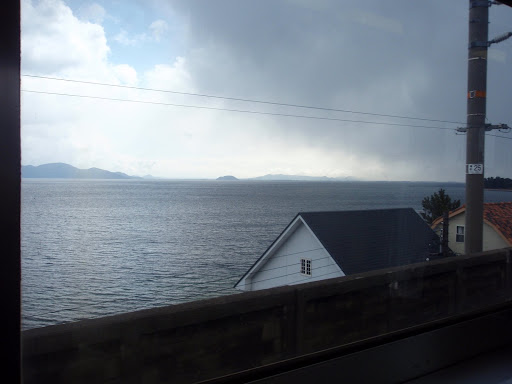
But before we begin, a photo of Lake Biwa, the largest lake in Japan, I have happened during a train ride.
Well then.
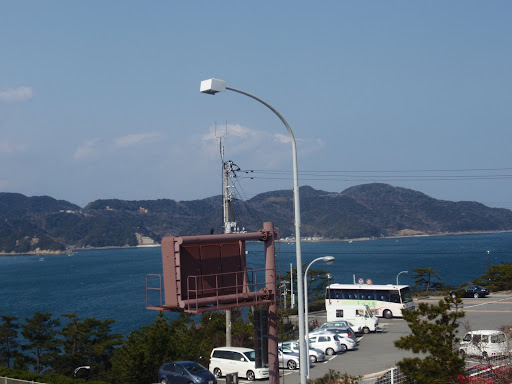
On the advice of a friend (David in the summer, and because it is simply a part), I have a day trip on the island of Shikoku (-> Kanji) made some time ago. Literally, the name 4 countries since they were divided into 4 provinces, from which emerged the present-day prefectures. I am by bus from Kobe out, via Awaji, a small island between Honshu and Shikoku, where previously deposed emperors were exiled down in the eastern prefecture of Tokushima and the same prefecture capital, where I ate too wonderful sushi lunch. Shikoku is a very good tip for his fish was also striking because everywhere along the coast are put in the fish nets. In between, I made a short stop on the bridge of Awaji to Shikoku, as it there a particularly nice view of the inner sea is. Also is a popular place for tourists, are as below the bridge huge whirlpool. As this happens only at high tide and low tide, I have unfortunately not seen, but only saw the swirls on posters, but they seem to be impressive. Then I'm gone
take the train in the Kagawa Prefecture, and got off somewhere middle of the country in a small town. You learn there a side of Japan know that is so different than we are used to on TV and the big cities, and get the foreigners thus rarely seen. Particularly it is realized also in the reactions of residents to the presence of a Gaijin, man ist es ja gewohnt, daß die Leute einen ab und zu anstarren, aber es ist eben eine ganz neue Ebene.
Kinder die gerade noch plappern, brechen beim Anblick mitten im Satz ab, alte Menschen, deren Blick aussieht, als würden sie sich fragen, ob die Amerikaner nun doch noch eine Invasion durchführen, und das Schulmädchen, das aufgeregt ihren Freundinnen oder Eltern erzählt, daß sie auf dem Heimweg von einem Gaijin angesprochen und auf japanisch(!) nach dem Weg zum Bahnhof gefragt wurde (okay, daß sie das getan hat, ist nur eine gewagte Vermutung von mir, aber durchaus eine realistische Annahme).
Das Ganze erzeugt aber keineswegs negative Gefühle, da die Japaner es nicht böse hostile or mean, but are only really just surprised. Since I'm from the country, I can understand them, because I would be surprised if I run in my home village, a Japanese on the way and ask me for directions in German to the bus stop would. Otherwise, it was
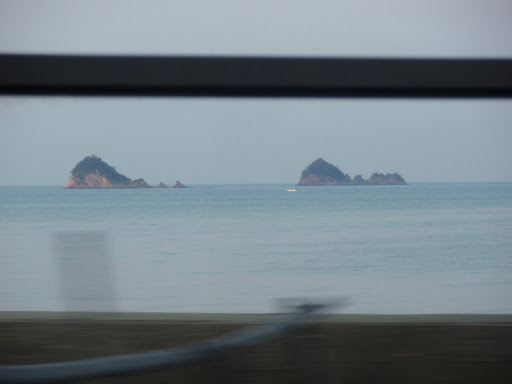
really beautiful, and I could certainly imagine to live there: there is a local specialty, a variant of Kagawa Udon (name I have now unfortunately forgotten), it is very quiet and cozy, and on the one hand one has the sea, which is very warm in summer and always provides good fish while on the other hand, some forested hills for hiking invite directly. In addition, Osaka is not excessively time really seen farther than Vienna, from my home in Austria.
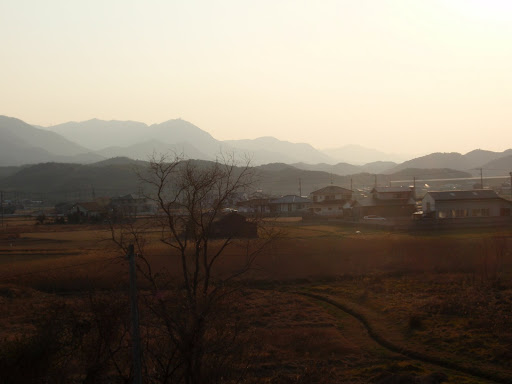
Two particularly notable things struck me: I have identified for the first time station buildings that look like us (the country) and the whole time in Kagawa whether out of the train, or in the city I have not a single Conbini (the 24-hour "Kreisler") seen, while supermarkets and shops and everything, but no Conbini. I was only a few hours there, but everywhere else it all falls over a few meters, but there? Not one. Therefore, Kagawa Prefecture for me now without Conbinis.
interesting (and funny) facts / opinions about Japan:
Shikoku is the smallest of the four main islands of Japan (Honshu, Hokkaido, Kyushu) and is also considered the least well developed. Accordingly, most of the resident on the island of companies in the primary and secondary sectors are active, although the majority of the population commutes to the main island. About 20 years ago opened the first of now three connecting bridges to Honshu, to stop the traffic point of isolation of the island and to promote economic development. Although the link to the rest of Japan was strongly improved, the expected development boom failed, and it is only comparatively slowly. So there are no misunderstandings, "underdeveloped" is in Japan are still high level, you realize just simply quite clear that you are on land, as if one of Vienna used to and would then go somewhere "to land" in Lower Austria, Styria and Burgenland what the author for his part, often preferred. Intereassant is that in Shikoku, as one of the few areas of Japan, were adopted with the introduction of the prefecture system during the Meiji Restoration, the boundaries of the old provinces almost 1:1.


0 comments:
Post a Comment