White beach is the translation of Shirahama (白 浜), the village where I spent last week 2 days.
But first: I am only today noticed that Blogger "swallowed" in yesterday's entry was the last paragraph, which does not surprise me, because yesterday the Google applications (Mail, Blogger, Picasa) all have had problems with me. Excuse me, it is repaired, and the column from the last entry now to read.
Let's go ahead.
A warning first: Today, again involved a lot of photos.
Shirahama Wakayama Prefecture is located in the south of the Kansai region, southeast of Osaka Bay and I was almost at the southern tip of the main island of Honshu. Shirahama is also a very popular destination for Japanese, mainly because of the namesgebendem white sandy beach, so (the time in the Japanese go swimming in the sea) the place from late July to late August, tourists can hardly save. I have stayed in a ryokan, complete with a small garden and koi, which was run by a nice old couple. By evening I have not seen a single other foreigner in town, then erst sind ins Ryokan zwei Italienerinnen und ein Amerikaner gekommen. Wir waren die einzigen Gäste und ich würde mal wagen zu behaupten, die einzigen Ausländer weit und breit.
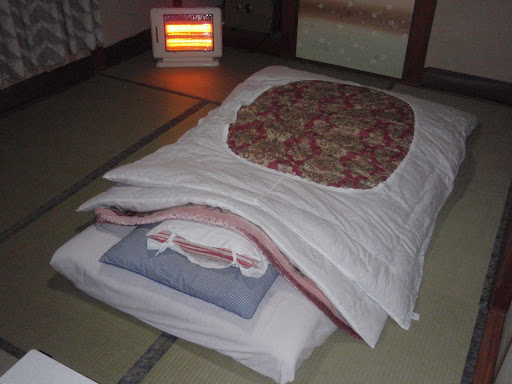
Ein Photo eines aufgelegten Futons, sowie des Ehepaars (der Großvater sprach auch wirklich gutes Englisch) und meiner "Mitbewohner".


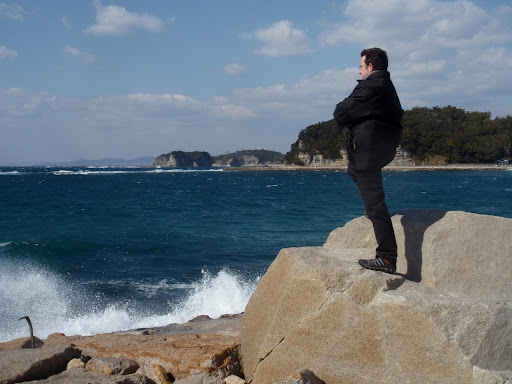
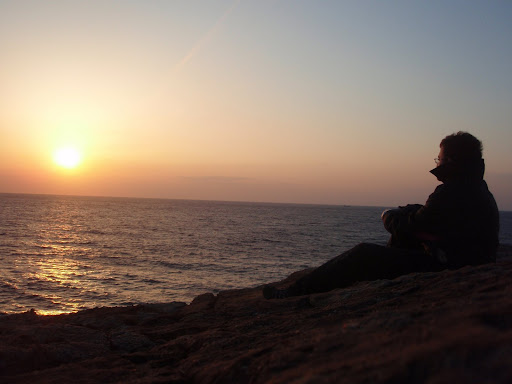
Hier ein paar Eindrücke des Strandes, und des Daimyos während er sinnierend auf das Meer starrt ...
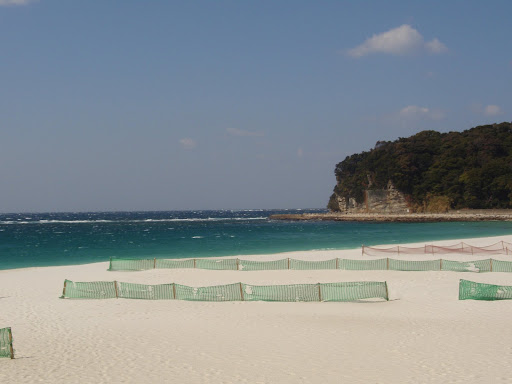
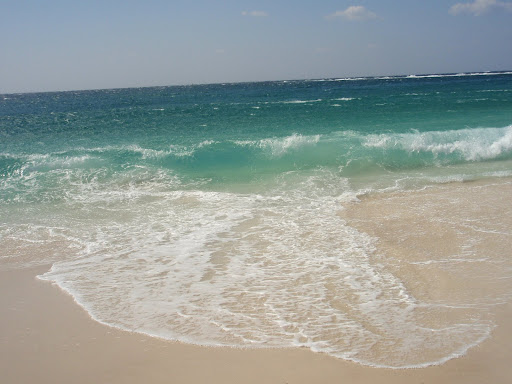
Lustiges Detail: Der weiße Sand wurde eigentlich schon vor langer Zeit fast aller weggeschwemmt, weswegen die Japaner weißen Sand aus Australien importiert haben. Warum Australien? Weil der Sand von dort genau wie der originale aussieht.
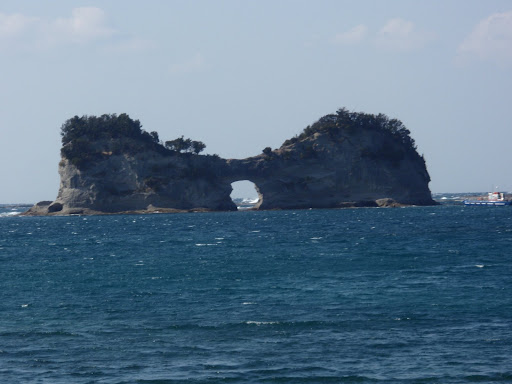
Andere berühmte Plätze sind die Vollmondinsel (engetsutou 円月島), so genannt wegen des kreisrunden Lochs in der Mitte.
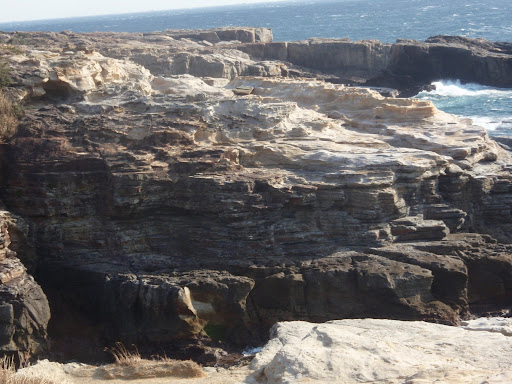
Die Klippe der Tatami-matten, weil es so aussieht als wären unzählige Tatami-Matte übereinander gelegt (allerdings befürchte ich, man muß schon mal in Japan gewesen sein, um das zu erkennen).
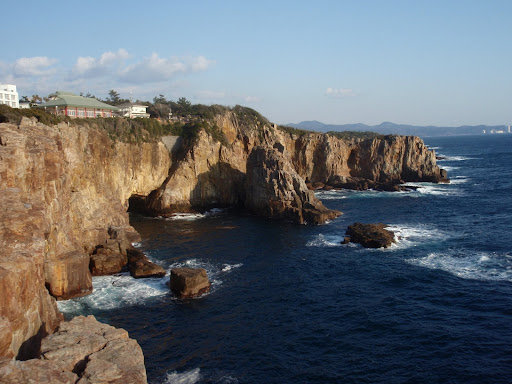
Die Drei-Stufen-Wand/Klippe, Sandanpeki. Runs quite long meaning Magnificent view, especially at night and you can climb a little.
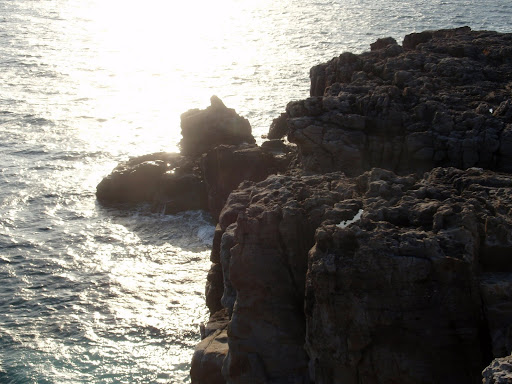
Sakino-yu Onsen. An open-air onsen in the water of a natural stone basin, and directly to the sea. And with the sea, I think that one big waves, sea water can splash in the face. In summer (late February, it's too cold) you can directly get the few yards from the sea and cool down there in the water. But watch out, men! The Spechtler of the women's side only too happy to see a naked male gaijin to it.
use fee of Onsen: 1,80 €
I have no photo, I used the image from Wikipedia, but in reality it is beautiful, especially in sun.

Photo owned by Attila BUJDOSÓ
Shirahama As an onsen resort, there are also all over the city very much foot baths. They are filled with small pools with thermal water, in which each can hold times short his aching feet, of course, free.
What struck me at sunset, is not the sun sinks into the sea, but short of about 100 km away, Shikoku.
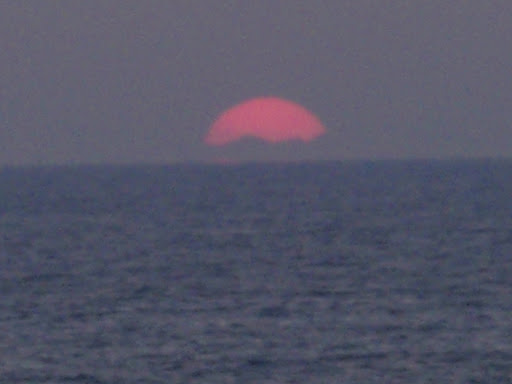
My overall impression of Shirahama is summarized beautifully in this photo.
interesting (and funny) facts / opinions about Japan: The
Sagino-yu Onsen is one of the top three hot springs in Japan (actually twice: the three large and three old) and is famous mainly because of his age. Shirahama and Onsen allegedly already in one of the oldest surviving Japanese text was mentioned, and he would therefore be in use for about 1300 years. Also, the city boasted that alleged several large, famous emperor, some as early as the Heian period (781-1198), have a bath here. The water that is used in the Onsen is in the upper basin so hot that the pool today with a simple garden hose, cold water is added, as you might otherwise be scalded.
But who can stand it, can sit directly under the hot inflow.


0 comments:
Post a Comment