Sunday, April 13, 2008

How Do U Know If Shrimp Is Old

epilogue

The seemingly impossible day has actually arrived.
have suspended me. Here in der Ferne. Auf das ich nie wieder zurück finde und mein Leben ein Ende in Schande findet.

Aber wie haben sie sich doch getäuscht!
Anstelle dahinzusiechen und in niederen Diensten, mit nicht einmal einem Schatten meines einztigen Ruhmes, mein Leben zu verbringen, habe ich neue Verbündete gefunden, viele Getreue um mich gescharrt, bin an Kämpfen und Erfahrungen um ein vielfaches reicher und habe glanzvolle Siege errungen.
Und nun endlich ist der Tag gekommen, an dem ich wiederkehre um zurückfordern was rechtmäßig mir gehört!
Nein, nein, nicht um einfach nur wieder die Position an der Institution einzunehmen, die mir zusteht, oh nein, jetzt ist der Augenblick gekommen meinen Vorgesetzten their errors to present and expose the slanders of my enemies in order to demand a promotion and a position in the top ranks.
should now all be aware of my true skills ...


It is a cruel day for my enemies,
I'm back!

Fast Pa Replacement Title

Right of Way

Yes, as some already know by now, I'm finally at the end of the road yet arrived. For reasons I could not never studied one year to study in Japan, had it in about 7 months and have now been definitively abandoned some time back home. The living and studying in Graz me again and say it Well, as the Americans "It is not pretty."

But now what about Japan. The day I left, two friends (Yuki and Roberto) are again extra driven to the airport to say goodbye, and have thus caused a befitting honor guard as they have worn my jacket and my bag for me (when the ruling daimyo of western provinces of travel abroad, so, you have probably believed me).


why it is now even have time for thanks to those people in Japan, where I study the way there and owe a really great time in Kobe. Do me a personal favor and read to you through the list, they deserve it.
The list is ranked in any way, I write the names on just how they come to mind.

Beginning I have yet to Naomi Goto, the contact person for the settlement of the exchange program that gave me many months before always helped, either give me advice or stand up for myself the trouble with the other faculties and Insitute in touch and ask for the courses. They, too, has always taken the time to the harried, anxious questions of an exchange student (the pioneer of the University of Graz) to respond with patience. And somehow she has managed very often, when we went on our way are to have a Scherl Trat time.
For all that and much, much more, a really great big thank you!
(you should only try to come often to ski;)

Saki Tanaka, the second great help of the International Student Division and the soul of man, as it will take the initiative and offering help, even if only in passing of the mishaps of a student belongs;
David Cattel, the brilliant British from the summer course, without whom I would not have found the ingenious sushi shop well, because we are at it,
The two lads at Sushi Shop, for the good and cheap (free ) food and the talks here (It has even learned a lot);
Yuki Tomari, a very dear friend who gave me much shown in Kobe and so often was there for me;
Nick Greaves another Briton from the summer school, he attend a game of Hanshin Tigers (baseball) is organizing and has always had weider other good ideas;
Yasumi Murakami, the AIESECerin that was already in the summer one of my supporters and also in the semester German course (I might have it a little too much "tortured" but they yes the summer has made me the same);
My host family Michiko, Seiichiro, Ryouta and Takuya Ushijima, for support in the Japanese daily life and regular invitations to always excellent dinner;
Prof. Ikuko Seguchi, for the good insight into Japanese culture and the patient with a linguistically untalented students;
Prof. Yoshikazu Masuda, my academic mentor, and that of me has ever been invited to the first German course;
Prof. Stefan Trummer, but me the only real Austrians (from Bruck / Mur) at the university, for all the great tips and insights in Japan (we are in summer);
Prof. Richard Harrison, his only mistake is only that he is a fan of Manchester United;
Azrael, who prepared me well on his blog with the craziness in Japan, and so reduces the culture shock is strong (all Gute zur Verlobung)
Mikael/Mike Persson der verrückte Schwede, was wir allen zusammen aufgeführt haben ..., jetzt muß er sich einen anderen wahnsinnigen Nachbarn suchen, der mit ihm was unternimmt;
Simon Morris, der andere Brite, der im Tischtennis niiieee eine Chance hatte;
David aus Irland, für die stundenlangen Wanderungen durch die Hügeln um Kobe und die Gespräche über Gott und die Welt dabei;
Sebastian Held, fast immer dabei wenn's ums Essen ging, und auch ein herzliches Danke für das Nachschicken der Pakete;
Svenja Kalmbach aus Hamburg, stets unterkühlt und unlustig und viel zu wenig zuckerresistent, für die vielen schönen Erlebnisse (inklusive Okinawa), but hopefully it stays away from the pot plants;
Roberto Sampaio, part of my honor guard, for the good times and the rapid translation of an important text in times of need;
His Serene Highness Prince Takaki Meiyuu (in Romaji: Helmut Hödl), for the invitation to his residence and the good advice on governance of provinces

And all the other good friends and people who helped me (whether in summer or in September and) and because of that I had a great time that I have not mentioned .
But you know that I am truly grateful to all of you and you will never forget.


Even if my way is per se to the end, the blog is still not. I still write some things about, I did not come (I owe you still always have the report of the summer), that is, that there is the usual weekly update, and even if it's all over, I will from time to time, here is something about Japan, for example, news, etc., so it is even worth it to look so once a month over. But until that's even more every week.

to adopt the same as I say once Azrael: In Japan they say, when you leave, usually "yes mata" which means "well, see you later" means. The well-known to us, "Sayonara" is more used when one expects the other person for a long time or never to see again. So, to Japan, I say "Yes mata!" Because I'll be back ... ^ _ ^


I close with an excerpt from a popular song of the Austro Pop (Austrian pop music) group STS
(The High German "translation" below)

"And irgendwaun permanent I then Durt; Let
ois Liegl and stand , vo go furt daham for intangible;
Then I give you my Wurt;
wievü Johr a no perish irgendwaun permanent then I Durt!

"And then one day I will stay there;
Lasse everything and want, go away from home forever (away);
Then I give you my word;
How many years pass away, some day I'll stay then there "


interesting (and funny) facts / opinions about Japan:

Due to the sudden disappearance of our author's column is now unfortunately

have any relevant information to. to find the missing author lead a reward is offered!

Monday, April 7, 2008

Wizard Was Interrupted Command And

In the South Seas Part 2

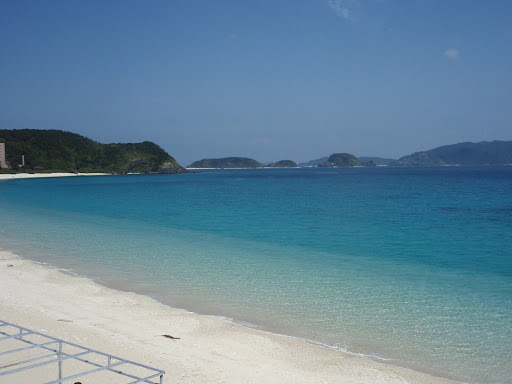
During our stay in Okinawa, we are also a ferry to one of the tens, the radius fluid control islets down, and there we have it done, what we already have enjoyed since the beginning of our trip to the Ryukyuinseln: On the beach white, basking and Sea bathing. Both
not a problem as it all the time on Okinawa has been 20-25 degrees, was great for sunbathing and the sea on the island also has 20 degrees, wonderful for swimming. Sorry, we did not have snorkeling gear here, which would have placed top it all, especially since even directly to beach fish of a size of 30, 40 inches swimming around, which could disturb the presence of a person. Since, as elsewhere mentioned, followed by Japanese always like the rules, and currently not a season for a visit to Sea, only a few people were on the beach.
course there are photos for proof of my claims, and yes, this Eintrag ist dazu gedacht meine geneigten Leser neidisch zu machen.


Weiters habe ich an einem anderen Tag allein, die Mädchen waren Wale beobachten, einigen der lokalen Museen einen Besuch abgestattet.

Vorsicht! Trockener Geschichtsunterricht

Vor allem das offzielle Präfektur-Museum von Okinawa hat es mir angetan. Dort wird sehr anschaulich an Modellen und mittels elektronischen Hilfsmittel die allgemeine und spezielle Geschichte der Ryukyuinseln und die einheimische Flora und Fauna dargestellt (Fürst 高貴, das wäre etwas für Euch gewesen). Beginnend in the stone age, we learn that Japan was settled by both sides, from one part of the northern route from Siberia, etc., and even the descendants of these tribes, the Ainu, isolated on Hokkaido live (with one very clear in appearance can be seen that they a different breed than the Japanese members), the other, on the southern route from southern China via the Ryukyuinseln. Both directions were possible because at that time in the north and south islands closer to the mainland and many were still were under water. Furthermore, we learn much about the development of the kingdom and its rulers to Okinawa, the mutual and interesting relationships with neighboring countries China and Japan, and a bit about the Battle of Okinawa with the ensuing almost 30 years of occupation and administration by the Americans, will also address the problems with the occupying forces and members of the Navy of today.
No less part of the exhibition is the cultural characteristics of the Ryukyu devoted time, which differed because of different influences in some respects but much of the mainly Japanese, and therefore reverberate to this day.

Very interesting were the descriptions and models of domestic animal and plant life, from the northernmost to the southernmost island, but some changes go through although generally regarded as the climate is subtropical can be described. It is on the southern islands, which we wanted to travel initially, where the journey but twice (!) Would have been so expensive as to Naha, really right dense jungle, mainly composed of mangrove forest, with all the typical jungle animals.
The only problem I had with the show was, as so often in a museum that I would have simply required more time, everything to me to look more closely.

Unfortunately I posted no photos of the exhibits


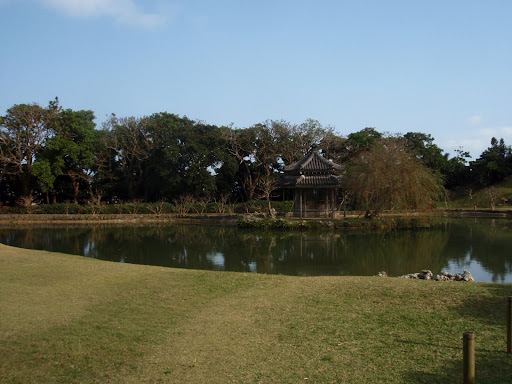
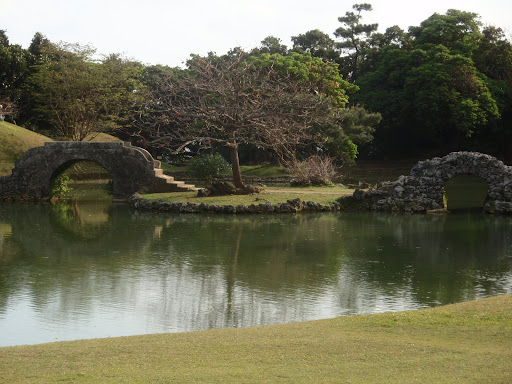
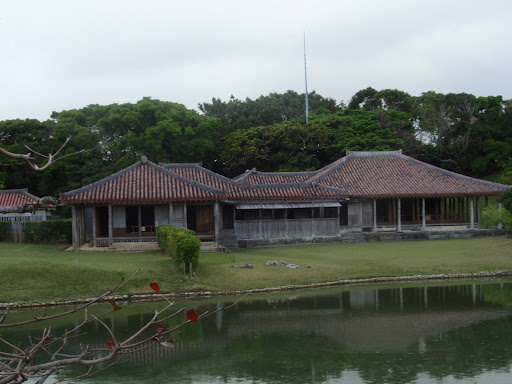
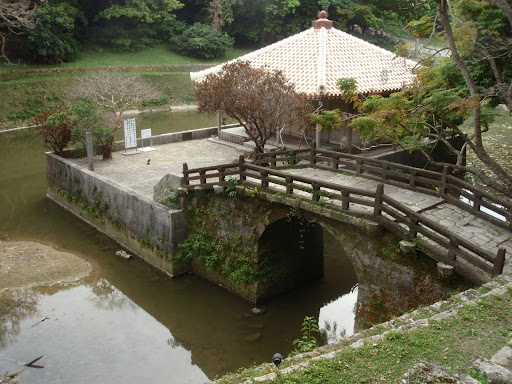
as the latter, we were still in the royal gardens. These were originally a part, as a recreational space, including a small house for the royal family to the south of Shuri Castle (only) built at the end of the 18th century, on the other hand, they also served as a receiving point for Chinese delegations. Therefore, some typical characteristics of Chinese garden design incorporates, for example, an octagonal pavilion in the Chinese construction on a small island in the pond, or the general basic structure of the garden. As also reported the gardens were destroyed in World War 2, in the 70's then began the restoration, which has now after 30 years (due to the time required for the growth of plants, etc.) re-created the original character and appearance.
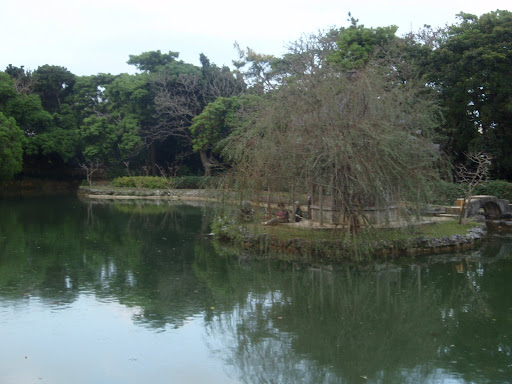
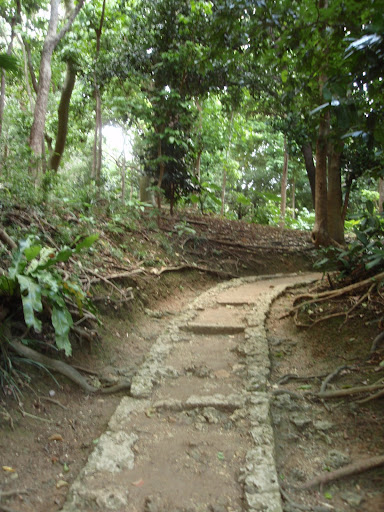
Today, the gardens of the world cultural heritage and are one of the places of national scenic beauty of Japan. How are common for large gardens, while many Asian parts neatly trimmed and processed, but in contrast to eg an English garden, areas for the most part left to itself, so that, if one follows the paths, you get the feeling that they follow the jungle the old streets of a long lost civilization, and behind the next corner could be a long-ruined city appear that civilization. Therefore not be missing the warning signs of snakes that can be hidden in the undergrowth.


interesting (and funny) facts / opinions about Japan:

In the Edo period was the Ryukyukönigreich in double function of the Chinese empire of the Qing Dynasty and Japan under the Tokugawa shogunate. Therefore, in addition to the payments and receiving delegations also included trips to the administrative capitals of China and Japan the duty of the court of Ryukyu. This means on one side of a journey of several thousand kilometers by boat from Taiwan to southern China and from there by road to Beijing / Beijing on the other side also several thousand mile journey by ship to Kyushu and western Honshu and then by road to Edo (now Tokyo) and in both cases the same way back. Both trips lasted about a year and were usually led by a prince, although, just as it corresponded to the court etiquette and protocol (actually worldwide), the respective delegation had an impressive size and countless articles of inestimable value as a gift or were carried as a provision for the ads of their own size.

Thursday, April 3, 2008

Products To Reduce Redness?

In the South Seas, Part 1

Well, I was not really in the South Seas, but it draws attention to und Okinawa ist zumindest auf der Höhe von Dubai. Außerdem gibt es dort Sandstrände, Palmen und warmes Meer, also ist es nicht ganz so verschieden von der Südsee.
Nun denn, ich war insgesamt 6 Tage (schon vor längerer Zeit) mit Svenja und Sara eben auf Okinawa (-->Kanji) der Hauptinsel des Ryukyu-Archipels und der Präfektur Okinawa.


Kurze Unterbrechung:

Am Weg zum Flughafen in Kobe bin ich an der Mittelschule neben meinem Wohnheim vorbeigekommen, wo anscheinend gerade die Abschlußzeremonien für die Absolventenklasse im Gang war. Die Absolventen sind beim Herauskommen aus der Schule an ihren jüngeren Kollegen (die Spalier standen) vorbeigelaufen, einige haben sich am Weg verbeugt, und es war recht ausgelassen, obwohl es sehr klein im Vergleich zu den Abschlußfeiern der Oberschulen ist. Diese sind vergleichbar mit unseren Maturantenverabschiedungen und die Mädchen tragen dort sehr farbenfrohe traditionell angehauchte Kostüme.
Leider habe ich das Ganze nur sehr am Rande mitbekommen, da ich meinen Flug erwischen mußte. Wen es aber interessiert (und der englisch kann) Azrael hat auf seiner Seite sehr ausführlich über den offiziellen Teil einer Mittelschulenabschlußfeier berichtet, da er an mehreren unterrichtet hat.


Doch zurück auf die Insel:

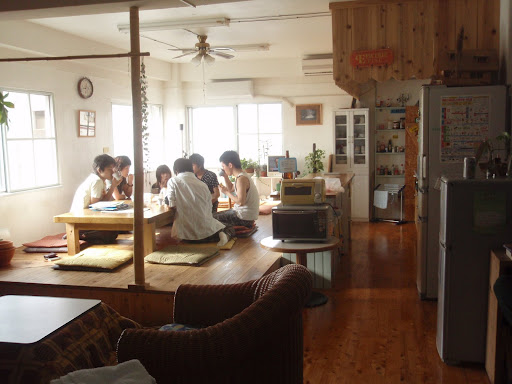
Übernachtet haben wir in einem Jugendgästehaus/herberge, welches für ein Jugendgästehaus itself and especially in Japan was unusual. Firstly there was the possibility that men and women together to share a private room, the room itself (the dorms) were not only very clean but also set up quite new and all in all it was the comfort and atmosphere more like a small hotel, but the price was still very small.


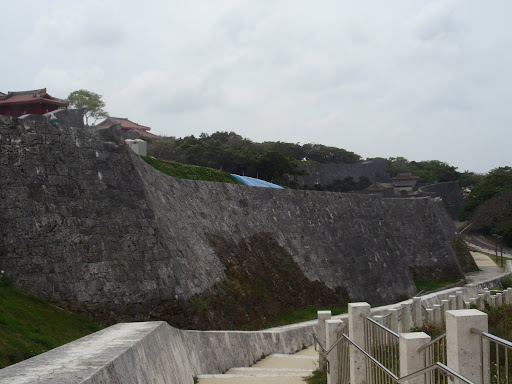
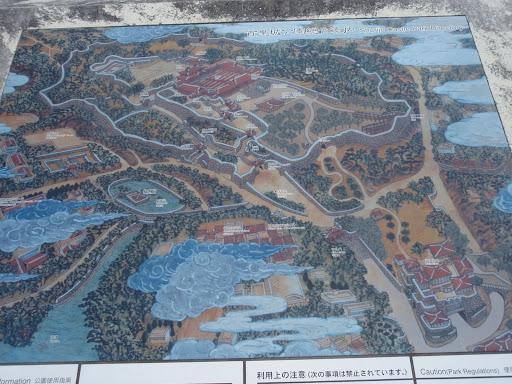
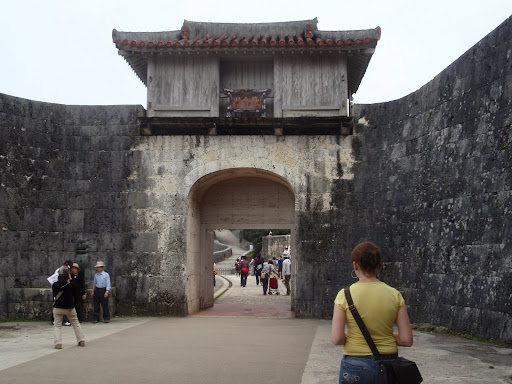
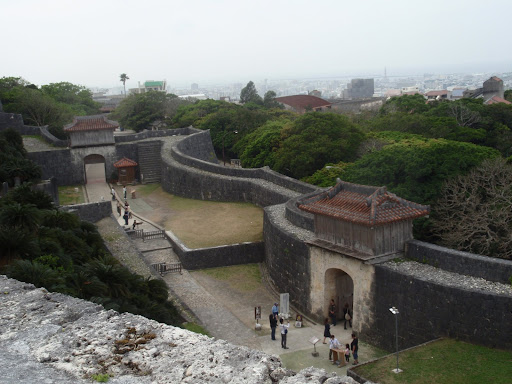
As the first major station we were at Shuri Castle in the east of the capital of Naha. Shuri was at the Battle of Okinawa, one of the most competitive venues, of which the castle was destroyed almost completely. Especially since the Americans um die Verteidigung zu durchbrechen, das Schloß bombardierten und die Mauern mit großkalibrigen, panzerbrechenden Granaten von den Kriegsschiffen aus beschossen, wobei aber entgegen der Vorstellung nicht einige wenige, sondern angeblich weit über hundert Granaten benötigt wurden, um die Mauer zu knacken. Dies lag wohl einerseits an der sehr guten Bauleistung bei der Errichtung der Mauern, und andererseits an der Tatsache, daß diese nicht senkrecht, sondern schräg in die Höhe gezogen wurden, wodurch die Granaten abprallen und nicht ihre volle Wirkung erzielen können (deswegen wird bei Panzern die Panzerung im allgemeinen auch abgeschrägt).
Bevor jetzt böse Worte in Richtung Amerika gesprochen werden: Für the destruction of Shuri I give the Americans not to blame, but the Japanese. Not only did large parts of the system since the Meiji period were left to decay where the Japanese, the lock who used jahrzehnetlang as barracks, and there was the time of World War 2 also as headquarters of the armed forces of the prefecture of Okinawa and around it. This made it a legitimate military target, and even a primary goal that we must attack practical. I would have done instead of American leadership, too.
What do I blame the Americans is to destroy the royal gardens further south (of which ich später berichte), die bei einem strategischen Luftangriff auf Okinawa bereits im November '44 praktisch vollständig vernichtet wurden, denn diese hatten absolut keine militärische Bedeutung und sind einfach draufgegangen, weil sie eben zufällig auf dem Weg lagen (von den zivilen Opfern nicht zu reden).
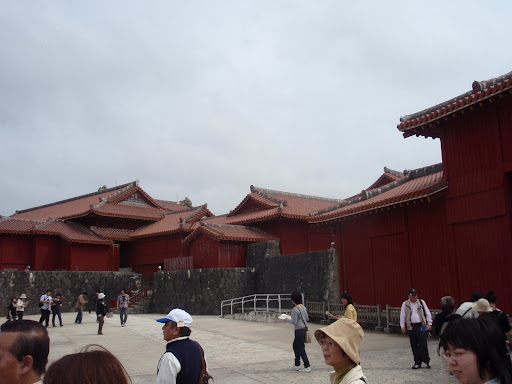
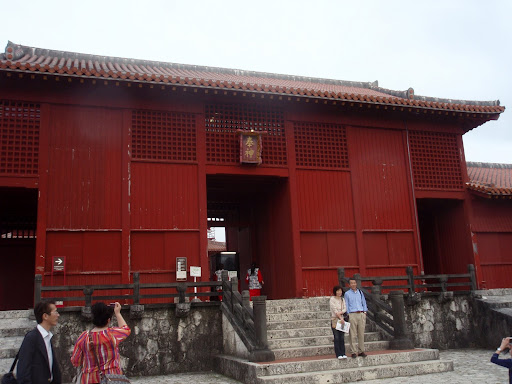
Zum Glück wird schon seit Jahrzehnten, mit großen Investitionen, an der Restaurierung der alten Kulturschätze gearbeitet, sodaß heute (nach ca. 30 Jahren) die königlichen Gärten wieder in ihrer vollen Pracht zu bewundern sind, und auch Schloß Shuri ist, bis auf Teile des innersten Hofes und die Gemächer, wiederhergestellt, und zwar in seiner ursprünglichen Form zur Zeit des Königreichs vor der Meiji-Restauration.


Natürlich hatte der Daimyo der Provinzen des mittleren Westens, bei seinem Besuch der Präfektur Okinawa auch eine Audienz bei seiner Majestät, dem König. Selbstverständlich hat der Daimyo sich zu diesem Zweck um den König seinen Respekt zu erweisen, zusammen mit zwei Hofdamen, die ihn auf der Reise begleiten, in die traditionellen Gewänder der Insel gekleidet.


Gut erkennbar: Der Unterschied zwischen den alten Steinen, die die Schlacht überstanden haben, und den bei der Restaurierung verwendeten.


Eine Zeichnung der gesamten Anlage


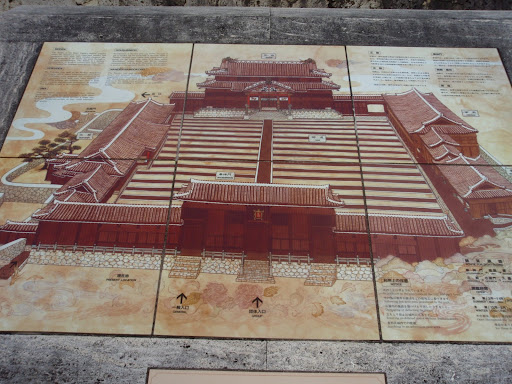
A drawing of the inner courtyard


a "problem" on Okinawa especially Naha, is that it is obviously a favorite destination of American tourists (I have nirgenwo never seen in Japan so many), so Nahas main streets are crammed with shops (in the direction of a tourist trap), which of course, designed especially to the tastes of American tourists are. Unfortunately, many also behave as it corresponds to the stereotype of the boorish American tourists. These are also the output of the present members stationed on Okinawa, U.S. Navy, which anyway do not have the best reputation on the island. mentioned

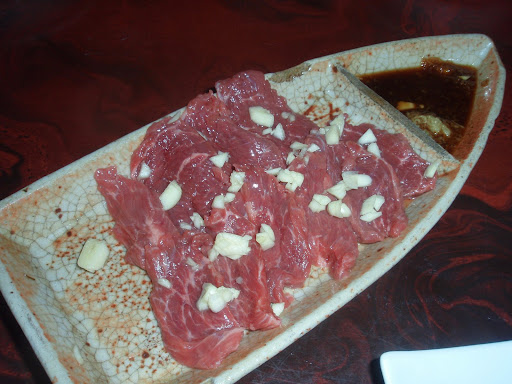
As in another report, has the kitchen Okinaw many specialties and deviations from the Japanese "main" kitchen. Among other things, we find it to because of a tip from another traveler who managed a small non-tourist restaurant in a side alley. Similar to my beloved sushi restaurant is run by an old mother and her daughter, and was very excited, especially the daughter, "true" gaijin, which can also Japanese, to entertain. Needless to say that we all evening (about 4 hours!) were the only foreigners in the pub. The food was really excellent, and because we a lot of "Sabisu" got service in pronunciation of Japanese, which means free food in the restaurant.


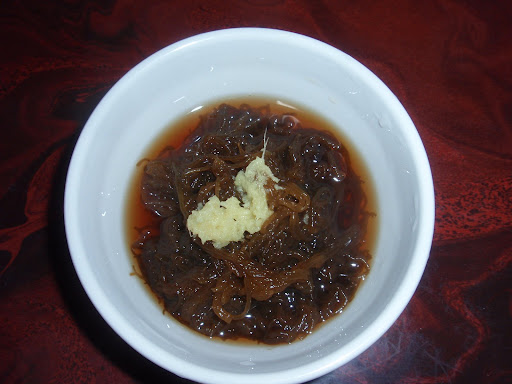
Who said that you can not eat raw meat?


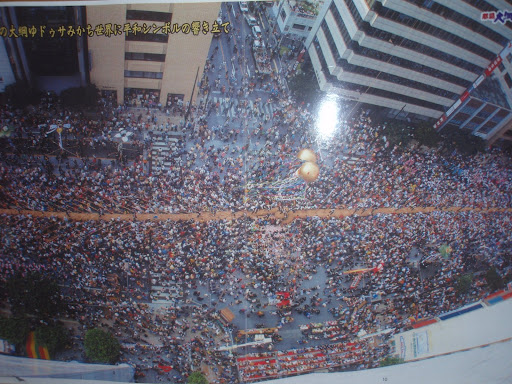
This photo is from a promotional poster for a year in autumn in Naha place-find festival where a giant knotted, hand-braided rope is carried through the streets (on the photo seen). The Kanji of Okinawa mean so much such as "rope in the sea (literally threw" how well is the tradition because of its size, the rope in the Guinness Book of Records, a record


interesting (and funny) facts / opinions about Japan..

The school year in Japan is called trimesters, three semesters instead of 2 divided half years (first at the university it will change to 2 semesters), and it begins on 1 April and officially launched on 31 March the following year end. Official holidays are New Year's uniform 2 weeks, 2 weeks in late March early April (about semester breaks), and 6 weeks in late July / early August, is also home to the national holidays and from time to time depending on the school-free days. As explained above, the students are also on holiday in school due to their clubs and is also available during the holidays sometimes school-related events, such as the high school students to visit during the summer holidays, for the purpose of selection decision, various universities.
The school system itself is often referred to as 6-3-3-4. Six years of primary school, followed by 3 years of high school, so that the general school leaving age of 9. Nevertheless, almost all students are (an estimated 95%) a secondary school, for which purpose they must exist but only a Aufnahemprüfung that often, depending on the school extremely hard. Therefore, many high school students spend the last year much of their time learning for the entrance exam.
After the three years of high school by many a 4-year Bachelor course completed at a university (again with rigorous entrance exams), the subsequent master's and doctoral courses visit, very few students, so they no longer expected to 6-3-3-4 be.


the time of the Ryukyu Kingdom, Shuri and Naha were two separate cities, with Shuri Castle was the capital city, Naha and the associated port (see Rome-Ostia). Over time, the two cities due to population increase approaching come until they practically merged into one city. Earlier but was in the Meiji Restoration and the establishment of the prefecture of Okinawa, Naha made capital, presumably to make the transition to a new era to identify the most important city not the city of the former king, Shuri, but the port and largest city, Naha.