Well, I was not really in the South Seas, but it draws attention to und Okinawa ist zumindest auf der Höhe von Dubai. Außerdem gibt es dort Sandstrände, Palmen und warmes Meer, also ist es nicht ganz so verschieden von der Südsee.
Nun denn, ich war insgesamt 6 Tage (schon vor längerer Zeit) mit Svenja und Sara eben auf Okinawa (-->Kanji) der Hauptinsel des Ryukyu-Archipels und der Präfektur Okinawa.
Kurze Unterbrechung:
Am Weg zum Flughafen in Kobe bin ich an der Mittelschule neben meinem Wohnheim vorbeigekommen, wo anscheinend gerade die Abschlußzeremonien für die Absolventenklasse im Gang war. Die Absolventen sind beim Herauskommen aus der Schule an ihren jüngeren Kollegen (die Spalier standen) vorbeigelaufen, einige haben sich am Weg verbeugt, und es war recht ausgelassen, obwohl es sehr klein im Vergleich zu den Abschlußfeiern der Oberschulen ist. Diese sind vergleichbar mit unseren Maturantenverabschiedungen und die Mädchen tragen dort sehr farbenfrohe traditionell angehauchte Kostüme.
Leider habe ich das Ganze nur sehr am Rande mitbekommen, da ich meinen Flug erwischen mußte. Wen es aber interessiert (und der englisch kann) Azrael hat auf seiner Seite sehr ausführlich über den offiziellen Teil einer Mittelschulenabschlußfeier berichtet, da er an mehreren unterrichtet hat.
Doch zurück auf die Insel:
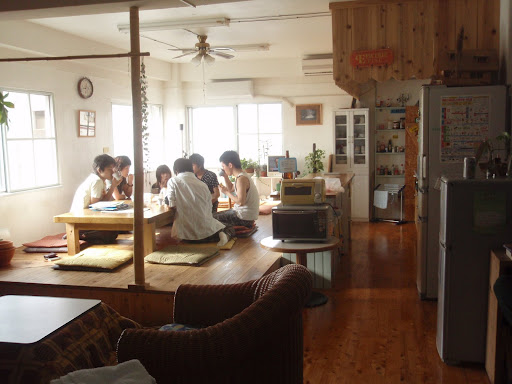
Übernachtet haben wir in einem Jugendgästehaus/herberge, welches für ein Jugendgästehaus itself and especially in Japan was unusual. Firstly there was the possibility that men and women together to share a private room, the room itself (the dorms) were not only very clean but also set up quite new and all in all it was the comfort and atmosphere more like a small hotel, but the price was still very small.
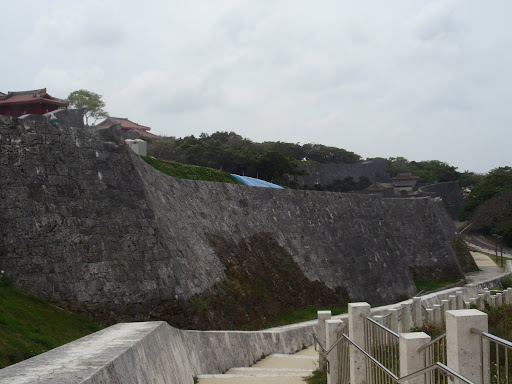
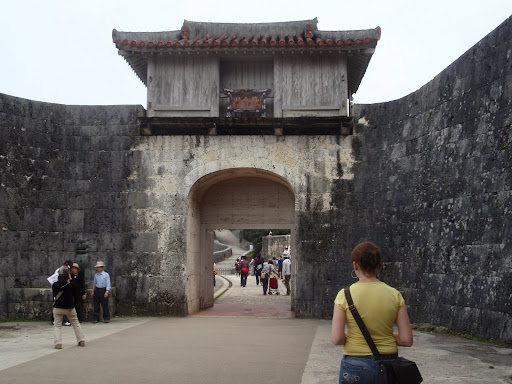
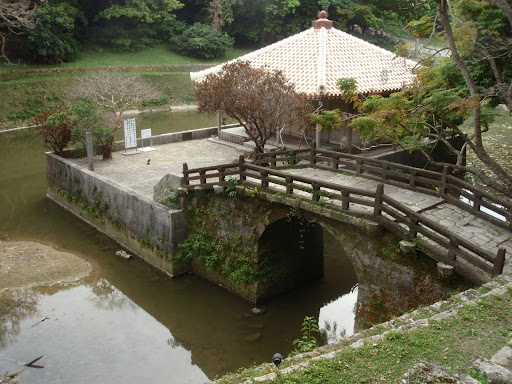
As the first major station we were at Shuri Castle in the east of the capital of Naha. Shuri was at the Battle of Okinawa, one of the most competitive venues, of which the castle was destroyed almost completely. Especially since the Americans um die Verteidigung zu durchbrechen, das Schloß bombardierten und die Mauern mit großkalibrigen, panzerbrechenden Granaten von den Kriegsschiffen aus beschossen, wobei aber entgegen der Vorstellung nicht einige wenige, sondern angeblich weit über hundert Granaten benötigt wurden, um die Mauer zu knacken. Dies lag wohl einerseits an der sehr guten Bauleistung bei der Errichtung der Mauern, und andererseits an der Tatsache, daß diese nicht senkrecht, sondern schräg in die Höhe gezogen wurden, wodurch die Granaten abprallen und nicht ihre volle Wirkung erzielen können (deswegen wird bei Panzern die Panzerung im allgemeinen auch abgeschrägt).
Bevor jetzt böse Worte in Richtung Amerika gesprochen werden: Für the destruction of Shuri I give the Americans not to blame, but the Japanese. Not only did large parts of the system since the Meiji period were left to decay where the Japanese, the lock who used jahrzehnetlang as barracks, and there was the time of World War 2 also as headquarters of the armed forces of the prefecture of Okinawa and around it. This made it a legitimate military target, and even a primary goal that we must attack practical. I would have done instead of American leadership, too.
What do I blame the Americans is to destroy the royal gardens further south (of which ich später berichte), die bei einem strategischen Luftangriff auf Okinawa bereits im November '44 praktisch vollständig vernichtet wurden, denn diese hatten absolut keine militärische Bedeutung und sind einfach draufgegangen, weil sie eben zufällig auf dem Weg lagen (von den zivilen Opfern nicht zu reden).
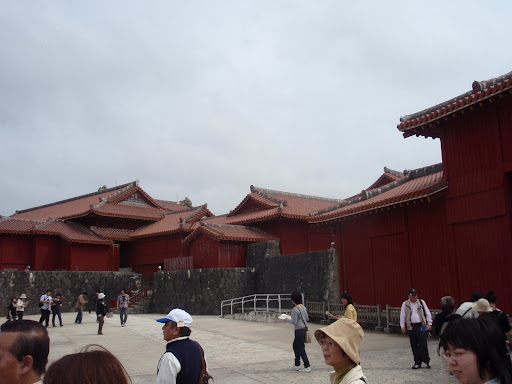
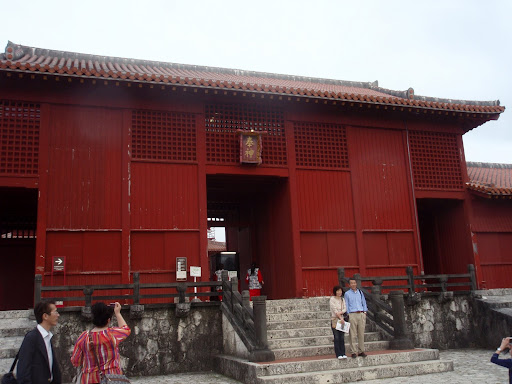
Zum Glück wird schon seit Jahrzehnten, mit großen Investitionen, an der Restaurierung der alten Kulturschätze gearbeitet, sodaß heute (nach ca. 30 Jahren) die königlichen Gärten wieder in ihrer vollen Pracht zu bewundern sind, und auch Schloß Shuri ist, bis auf Teile des innersten Hofes und die Gemächer, wiederhergestellt, und zwar in seiner ursprünglichen Form zur Zeit des Königreichs vor der Meiji-Restauration.
Natürlich hatte der Daimyo der Provinzen des mittleren Westens, bei seinem Besuch der Präfektur Okinawa auch eine Audienz bei seiner Majestät, dem König. Selbstverständlich hat der Daimyo sich zu diesem Zweck um den König seinen Respekt zu erweisen, zusammen mit zwei Hofdamen, die ihn auf der Reise begleiten, in die traditionellen Gewänder der Insel gekleidet.

Gut erkennbar: Der Unterschied zwischen den alten Steinen, die die Schlacht überstanden haben, und den bei der Restaurierung verwendeten.
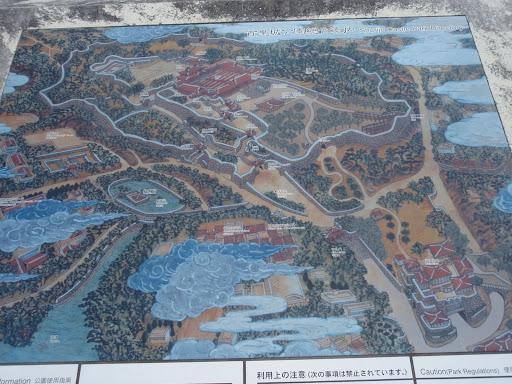
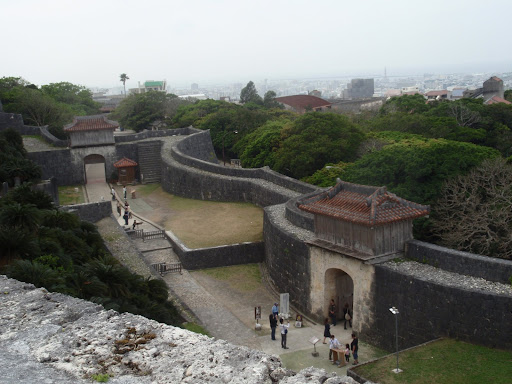
Eine Zeichnung der gesamten Anlage
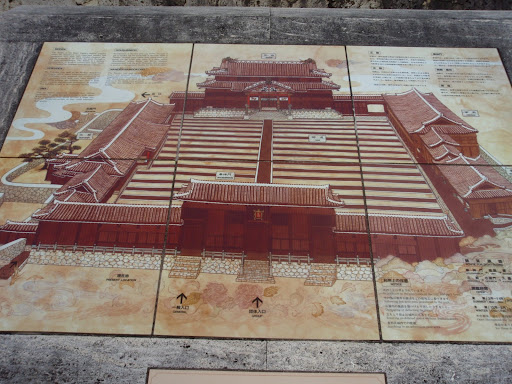
A drawing of the inner courtyard
a "problem" on Okinawa especially Naha, is that it is obviously a favorite destination of American tourists (I have nirgenwo never seen in Japan so many), so Nahas main streets are crammed with shops (in the direction of a tourist trap), which of course, designed especially to the tastes of American tourists are. Unfortunately, many also behave as it corresponds to the stereotype of the boorish American tourists. These are also the output of the present members stationed on Okinawa, U.S. Navy, which anyway do not have the best reputation on the island. mentioned
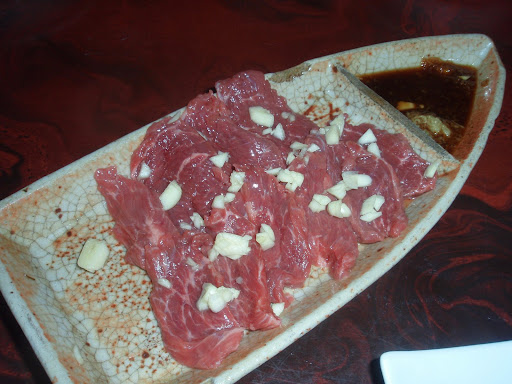
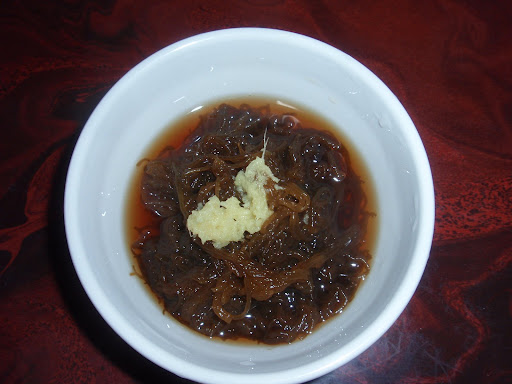
As in another report, has the kitchen Okinaw many specialties and deviations from the Japanese "main" kitchen. Among other things, we find it to because of a tip from another traveler who managed a small non-tourist restaurant in a side alley. Similar to my beloved sushi restaurant is run by an old mother and her daughter, and was very excited, especially the daughter, "true" gaijin, which can also Japanese, to entertain. Needless to say that we all evening (about 4 hours!) were the only foreigners in the pub. The food was really excellent, and because we a lot of "Sabisu" got service in pronunciation of Japanese, which means free food in the restaurant.
Who said that you can not eat raw meat?
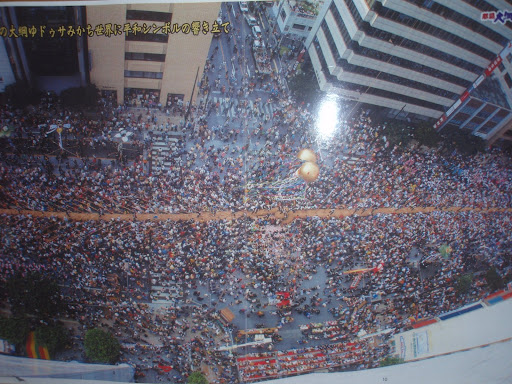
This photo is from a promotional poster for a year in autumn in Naha place-find festival where a giant knotted, hand-braided rope is carried through the streets (on the photo seen). The Kanji of Okinawa mean so much such as "rope in the sea (literally threw" how well is the tradition because of its size, the rope in the Guinness Book of Records, a record
interesting (and funny) facts / opinions about Japan..
The school year in Japan is called trimesters, three semesters instead of 2 divided half years (first at the university it will change to 2 semesters), and it begins on 1 April and officially launched on 31 March the following year end. Official holidays are New Year's uniform 2 weeks, 2 weeks in late March early April (about semester breaks), and 6 weeks in late July / early August, is also home to the national holidays and from time to time depending on the school-free days. As explained above, the students are also on holiday in school due to their clubs and is also available during the holidays sometimes school-related events, such as the high school students to visit during the summer holidays, for the purpose of selection decision, various universities.
The school system itself is often referred to as 6-3-3-4. Six years of primary school, followed by 3 years of high school, so that the general school leaving age of 9. Nevertheless, almost all students are (an estimated 95%) a secondary school, for which purpose they must exist but only a Aufnahemprüfung that often, depending on the school extremely hard. Therefore, many high school students spend the last year much of their time learning for the entrance exam.
After the three years of high school by many a 4-year Bachelor course completed at a university (again with rigorous entrance exams), the subsequent master's and doctoral courses visit, very few students, so they no longer expected to 6-3-3-4 be.
the time of the Ryukyu Kingdom, Shuri and Naha were two separate cities, with Shuri Castle was the capital city, Naha and the associated port (see Rome-Ostia). Over time, the two cities due to population increase approaching come until they practically merged into one city. Earlier but was in the Meiji Restoration and the establishment of the prefecture of Okinawa, Naha made capital, presumably to make the transition to a new era to identify the most important city not the city of the former king, Shuri, but the port and largest city, Naha.


0 comments:
Post a Comment