Monday, January 28, 2008

Why Is My Vision Looking Like A Kaleidoscope

Ryûkyû

Ich hoffe nach diesem Eintrag wieder zum gewohnten Mittwoch bzw. Mittwoch-Wochenende Rythmus mit meinen Updates zurückkehren zu können.

Also, wie bereits erwähnt waren die Tage nach dem Schitrip gefüllt mit Arbeit für die Uni, doch nach dem Erledigen dieser nervigen Nebenbeschäftigung, hat sich diese Woche auch wieder interessantes ereignet.

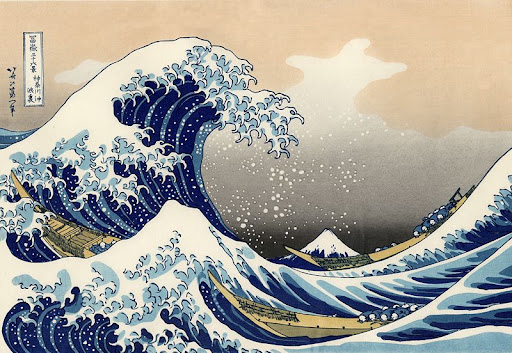
So habe ich zusammen mit einer Freundin eine Ausstellung im Stadtmuseum von Kobe über Ukiyo-e (浮世絵) besucht. Ukiyo bedeutet soviel wie "die vergängliche Welt" also so in Richtung des Diesseits und "e" steht in diesem Fall einfach für Bilder. Ukioye sind die, in der Edo-zeit aufgekommenen, japanischen Farbholzschnitte (auch zum Drucken bestimmt) und auch Bilder, wobei die Darstellungen sich auf das alltägliche Leben der Menschen, ihre Feste (sehr oft wurden bekannte Kabuki-darsteller gemalt) und der Umgebung konzentrieren, was ein Novum in der japanischen Kunst darstellte, was vielleicht ein wenig vergleichbar with the Biedermeier period, even as regards the middle class is. In the Western world, ukiyo-e became the term for traditional Japanese image representation, with well-Katsushika Hokusai and his series "36 Views of Mount Fuji" is most famous.
particularly interesting for me personally, is that Japanese Ukiyo-e also had some influence on European art after the opening of Japan, it was van Gogh greatly inspired by them and would build on the search for a "Japanese Landscape" in France have gone to his paintings, along the lines of ukiyo-e, can be oriented to this. He has also reproduced some known Japanese works in his style and colors.
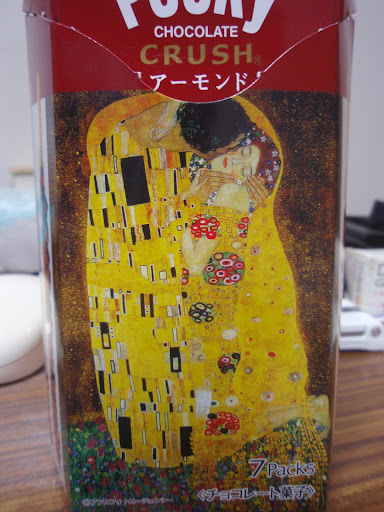
Other artists whose works were influenced by ukiyo-e were, including Gauguin and Klimt.
Ukiyo-e but also contains "vulgar" displays, such as images of courtesans and sex scenes, so they sometimes had problems in Japan itself (although more with the past than by legal constraints), or they are rejected by many Western critics were. Also, because of their depictions of the simple life, a critique must ask how well the Biedermeier and over again.
was
Unfortunately, as prohibited in most museum, photography strictly, so I can own heart no photos. Instead, a representation from the Internet, do not worry, 200 years after the copyright has expired: "Die große Welle von Kanagawa" aus Hokusais "36 Ansichten des Berg Fuji"-Zyklus (Das Original habe ich im Museum gesehen)


Das Besuchen der Ausstellung hat mir auch wieder vor Augen geführt, warum ich Moderne Kunst, insbesondere Abstrakte, nicht ausstehen kann. Wenn man die Bilder betrachtet, die Details, das Zusammenspiel der Farben bzw. die Farbpracht selbst, die Athmosphäre, sowie die Kunst z.B. mit nur Abstufungen der Farbe Blau auf weißer Leinwand ein wunderschönes und ästethisches Bild zu schaffen, so muß uns die moderne abstrakte "Kunst" dagegen als amateurhaft erscheinen. Egal ob es sich nun um Kunstrichtungen wie Jackson Pollock und sein "Action Painting is ", or the like which has arisen in the past 50 years, find where to but especially in Austria, Mühl and Nitsch extreme representatives.
What bothers me is the separation of vision and ability. An artist should and must of course have a vision to create a great piece, but now seems the term vision for a self-runner to have become, without simultaneously also exceptional skill needed. Often they seem to only have to do something exciting or abstract, and to know a marketing executive who knows this to market and sell it as art and it is already known, solange man behauptet, man hätte eine Vision zu diesem "Werk" und sie darin verarbeitet bzw. man will etwas damit ausdrücken. Ich nehme mich selbst als Beispiel: Wie schon mal gesagt, bin ich im Bereich der darstellenden Kunst ein Totalversager (Gott sei Dank nicht in der Musik), aber ich kann auch einen Kübel Blut auf eine Leinwand schütten, ein Loch in eine Dose Farbe bohren und über ein Gemälde tragen, oder Kugeln in Strumpfhosen stecken und diese zusammennähen. Doch man setze mich vor ein Gemälde von Da Vinci, van Gogh oder Klimt und erkläre mir ich solle es nachmalen, und ich werde denjenigen einfach nur auslachen und gehen.
Auf den Punkt gebracht ist meine Meinung, daß wirkliche Kunstwerke ohne technische Tools are not easy to copy.
is The sad thing that nowadays often artists with great skills and potential have no chance to become known as their images from the scene, and by many critics to be too exciting or spectacular enough to be regarded simply as "good". If you look at the history of art, the irony is unmistakable here.


I apologize here for the long paragraph about my personal views, especially because it has nothing to do with Japan, but I had to get rid of it easily.


Since we have spoken of Klimt, here is a print on a box of Pocky (Schokolade sticks)


Eine andere Packung hatte den Aufdruck eines Bildes von Renoir ("Junges Mädchen trägt Blumen")


Auch war ich diese Woche in einem Restaurant mit Okinawa-Küche essen. Diese besitzt aufgrund der langandauernden chinesischen Einflüße, aber vor allem wegen ihren kulturellen Eigenheiten, einige spezielle Besonderheiten, die man nirgendwo sonst in der japanischen Küche finden kann. Leider hatte ich meine Kamera nicht dabei, weswegen es keine Photos gibt, aber wenn ich wieder dorthin essen gehe, werde ich sie nicht vergessen.
(Für die Anime-Fans unter euch: Der Anime "Samurai Champloo "takes its name from the Okinawa-court" champuru, "which means" means Mix "and refers to the mix of modernity and tradition in this anime)

I apparently the only (Western) Gaijin (foreigners) at the restaurant have been held, the waitresses (there were only girls) a little joke with me. It is normal that a waiter when a guest walks past in them, welcome him, or if he is on the way to the exit to adopt him, but there there extra words in Japanese (I refer here to my entry about "irrashaimase), sometimes they also do this every time, even if it's the same guest. If you leave the restaurant, will be coming out of the nearest waiter standing still before extra, so it corresponds to the courtesy.
Anyway, while we entgegengenahmen now after eating the bill, have been behind me unnoticed (Japanese can do so) set up all the waitresses in a semicircle, and as I set foot on the first step of the stairs towards the exit, all have same time, quite noisy (with a broad grin on his face) "Come back please!" called, and they were amused if my surprised face.


interesting (and funny) facts / opinions about Japan:

The island Okinawa (冲 縄) is actually only the name of the main island of Okinawa prefecture, which consists of a whole chain of islands, whose real name Ryukyu (琉球) is. Originally own the Ryukyu Islands, due to intensive contacts with China and other Asian countries, and their relative autonomy until the early 17th Century, a distinct culture and language that the Japanese today is very similar, but may still be considered to be distinct, especially in terms of the Okinawa dialect, but is clearly different from standard Japanese.
The Ryukyu Islands were in the Middle Ages (from about 1000) an independent kingdom that was indeed strongly influenced by China and also pay tribute contributed to China, but due to China's policy of quasi-isolation for a very long time was virtually sovereign. In 1609, then took a daimyo, with the approval of the Shougun, Ryukyu, which she formally lost its independence, as well as the daimyo with tax obligations, and less direct control was satisfied, could the culture continue to exist relatively independently, especially since the King continued was maintained at the Chinese embassies in control by Japan not to disclose. Thus was
Ryukyu but more or less double in dependence on China and Japan, which led to some problems and tensions in the population, the reforms became necessary, which in effect led to a boom and a further strengthening of the specific characteristics of Ryukyus.
After the Meiji Restoration in 1868, and the separation from China (since Japan China defeated in several battles), there but for the establishment of the prefecture of Okinawa, and consequently the final elimination of the king, the direct control of all spheres of life by the government in Tokyo and the increased spread of Japanese culture and language of the main island (which is now often regarded as a kind Assimiliationspolitik).

Okinawa is particularly known for his role in the 2nd World War, as it is the only venue for a battle on Japanese soil really lived (Iwo Jima with the exception of Militär praktisch unbewohnt), und nach Iwo Jima die 2-verlustreichste Schlacht der Amerikaner im Pazifikkrieg war. Bis in die '70er standen die Inseln dann auch unter amerikanischer Besatzung und Verwaltung, noch heute befindet sich dort die zweitgrößte US Marinebasis des Pazifik. Das Verhältnis zwischen der Bevölkerung der Ryukyu-Inseln und der Regierung in Tokyo ist immer noch etwas gespannt, da erst ungefähr in den letzten 10 Jahren begonnen wurde die ursprüngliche Kultur und Sprache der Inseln zu fördern (allerdings nicht vom Staat), wobei vor allem die Sprache ein Problem darstellt, da viele Junge in die Städte der Hauptinsel auswandern, und den Okinawa-"Dialekt" nicht mehr beherrschen.

Friday, January 25, 2008

M Jak Milosc Idcinek 811 Online

Schifoan

But first:
Since New Year, as already mentioned, similar unsererm Christmas and thus is a family event, is a New Year's Eve in Japan: Boring. Although there are still many people on the road, and there is enough alcohol available, but it is hard to compare with our New Year's Eve celebrations.
For my part, I 31 spent with a visit to my host family, and went in the evening with Simon to Sannomiya. After an excellent meal in a side street restaurant (main courses are grilled and then served on small skewers), we have gone for the year in an English pub. As I said, the change was relatively unspectacular, but the realization that, while here already New Year is celebrated it at home just 16.00 Clock and on the West Coast even the morning of 31 is, was a strange feeling.


After I went to Tokyo, and at 4.1. embarked on a ski trip to Nagano. This exchange was organized by the student center, which bedeudet that the 35 participants were all exchange students, so unfortunately, except for the workers, no Japanese there. However, since over half of the people from Chinese and Koreans insisted were still plenty of opportunities to practice available in Japanese.

The first is in Nagano notice: snow. SNOW! And it is really really much. And freezing temperatures. Lovely!
Sorry, I need a little bit to get to me ... okay going back.

The rooms at the hotel were kept in the Japanese style (ryokan -> Kanji), which means that the floor was made of tatami mats and futons to sleep but gave no beds. A futon is a thin mattress (actually just a big, somewhat thicker blanket) (filled with beans in this case) to be placed on the tatami floor and a pillow and a blanket (thin in summer, thick in winter) to cover yourself. A futon is directed to put away after going to bed and placed in the box to be, for reasons of saving space. Unfortunately I have no good photo of the room, but you should also get a rough idea of \u200b\u200bit here.


The central table is cleared when you hang up the futons for sleeping.

People were each four to a room, with men and women, as is customary in Japan, not only on the room but were separated from floor to floor (except for families and couples, they were also in an extra floor, or section) .

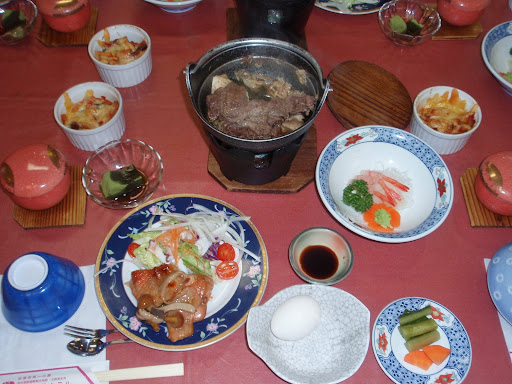
For breakfast, it was also tinged with western food (ham, sausages and scrambled eggs), the dinner was great but of course purely Asian (Japanese, Chinese) and very large and good.

An example


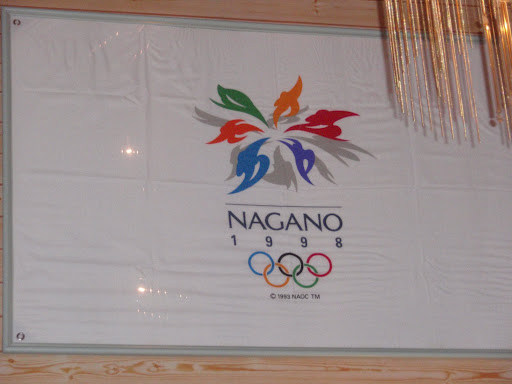
We were in the Shiga Kogen ski area, where are the slalom and Riesentorlaufpisten of the Olympic Winter Games of 1998 (unfortunately not the exit door, I would have liked the section where Hermann Maier started his flight). The nice thing was that the participants contrary to what is customary in Japan, were allowed to operate freely and independently, and did not have to be in a group. Except, of course, of the ski courses for beginners, but they were obviously happy to be in a group.
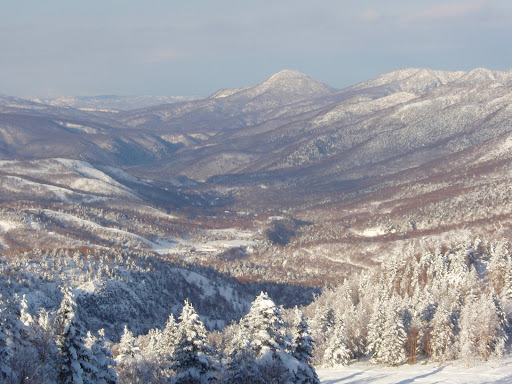
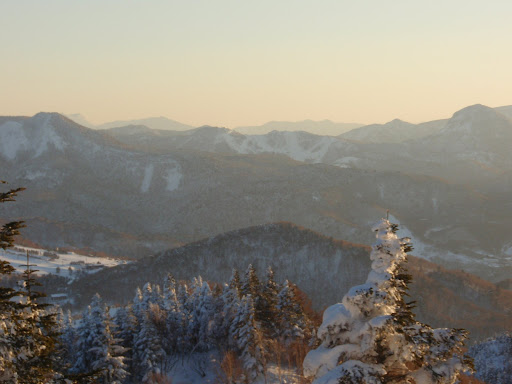
Japanese mountains are, as one can see in the photos below, because of their Formation of volcanoes in general, even at higher altitudes (2000m and upwards) relatively flat rising, mainly rounded. There is little more rugged cliffs and sharp peaks barely (as in the Alps), accordingly, there is also the majority of the slopes of green (in our case blue) and red runs. Yet of course there are also black runs, and sections (otherwise, the Olympics would have been difficult), but with these there are in Japan, I think a big problem: Japanese seem to be the view of black runs only from absolute professionals and from Freaks and crazy ride for those people just blow the snow was not only a right, which is why they integrate in more than half of all black sections, a mogul. With no warning or chance to avoid passing.
I personally HATE moguls. In my opinion, it seems like a good deal of advanced driver that bumps ruin otherwise beautiful slopes, because they interrupt the Fahrfluß, especially bad for men and material and is simply unnatural. There are people who drive them happy, and I have absolutely nothing against it from time to prepare for portions of slopes, but please but not to the entire width of every other beautiful black descent.


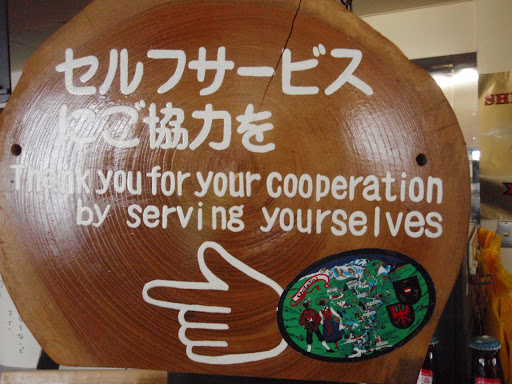
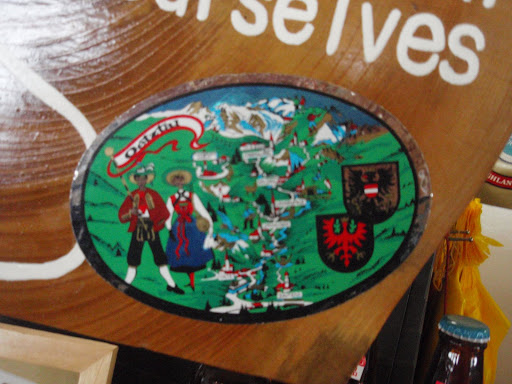
Something I've seen happen in a ski lodge on a hilltop:
A normal service sign, but note the sticker in the right corner.


Right! A sticker of the Ötztal, complete (not seen here) with place names in German
Not to sum up in the middle of Japan in any small ski hut.


As in Japan at such events (excursions, etc.) are common, there was this time one of the supervisors organized party in one evening. More detailed description of the structure and sequence such parties in the column. In any case, has been found that Asians, especially girls because of her petite figure, sometimes have problems with alcohol. That was a Chinese woman after Komsum (but almost on a train) (compared with far-called "alcopops") of a box of a Japanese sweet alcohol mixture "done" with not quite the alcohol content of beer, complete.

The Germans at work


Nagano is famous for its apple production areas (as I shall think of my hometown) and for its soba noodles. The apples we've seen for sale were truly enormous, thus the issue of cultivation methods raises, but, interestingly, they were not also artificially flawless, as are found in Austrian supermarkets often, they actually go out like normal, right apples.

were total there are 4 full days skiing with both 9-hour bus ride there and back. Despite this effort, it was just beautiful and it has paid off all cases.


interesting (and funny) facts / opinions about Japan:

parties in Japan. In Japan is common that are organized on trips, on longer conferences and meetings within larger companies, parties. This range from small, with snacks and a small selection of drinks, to big buffet with all kinds of alcoholic beverages. How herauszulesen from the last sentence, alcohol is always an important component, although the basic idea, of course, getting to know and maintain contacts with colleagues or relax in a casual atmosphere. To create any false expectations: The actual consumption of alcohol is one of the few points where the peer pressure is very low (he even seems to be lower than in Austria), but you should follow the non-drinking consistently throughout the party. Company and officially organized celebrations are almost always free while private parties it is usual that jeder Gast einen kleinen Anteil an Getränken und "Snacks" mitbringt, bzw. eine kleine Gebühr zu entrichten ist, für große Besorgungen die von jemandem Bestimmten erledigt wurden.
Ob rein privat oder geschäftlich, drei Dinge haben alle japanischen Partys gemein:
1) Sie dauern eine gewisse Zeit oder enden zu einem bestimmten, vorher festgesetzten Zeitpunkt. (im Falle der Schitrip-party war dies 22.00 Uhr) Damit ist die Party offiziell beendet und von den Gästen wird erwartet, daß sie den Ort des Geschehens verlassen.
2) Direkt am Ende der Party wird sofort alles aufgeräumt, wobei von allen Gästen erwartet wird, daß sie helfen (zumindest jene, die noch in der Lage dazu sind), der gesamte Garbage collected and leave the Venue as it was found.
3) The non-komsumierten food and drinks will be distributed to the guests, which means that each guest left of the things to take home may be what he wants without having to refer to who brought what.

Note: The above item featured on Rules and practices apply to parties that are not held in private homes (home of a host), but in areas which are specially designed for parties and meetings. At parties in private homes, the rules can change slightly depending on host. This is important, Japanese celebrate as often "outside", and it is on the contrary a great honor and a great sign of friendship and composite nature, if one is from a Japanese invited to his home.

Monday, January 21, 2008

Birthday Cakes At Safeway

The Eastern Capital - Tokyo

It is longer since I've left a note, when I turn on a skiing holiday was (report the next time) and done some other courses at the university (more or less) did. So I had
leave last week 2 term papers, presentations, and 3 (1-2 Individualpräs groups.) Keep one of which lasted 1 1 / 2 hours and partly in English was partly in Japanese. Yes, it was a stressful and time-consuming week. The good thing: For half of my classes I have to do nothing now, and the other half is not as strenuous.

now to the promised summary of my Tokyo trip.

After Tokyo, I flew by plane with a Japanese line from Kobe Airport. Note: Japan Airlines flight attendants are all female, young, and almost always very pretty, as stressed by their trendy uniforms. This is not sexist or similar meaning, it is considered the unofficial requirement in Japan, and flight attendants are normally chosen in large part to this (unofficial) criteria.
(The uniforms of the AUA, whether male or female, I find personally sehr häßlich)

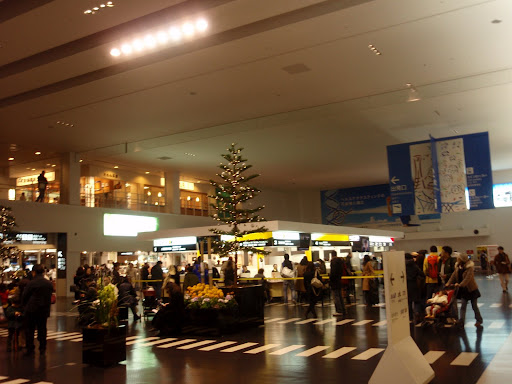
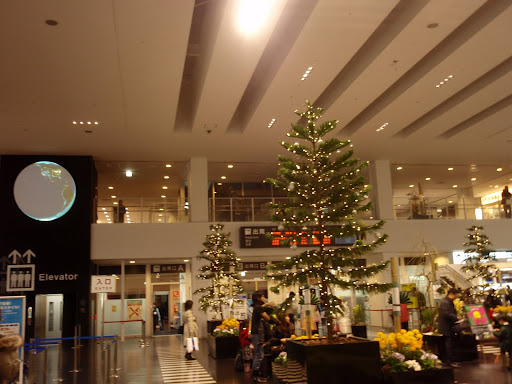
Der Kobe-Airport ist ganz neu (Eröffnung 2006), dient ausschließlich zu Inlandsflügen, weswegen er sehr klein ist und liegt auf einer kleinen künstlichen Insel gleich südlich von Port Island (der Portliner-Zug verbindet beide Insels mit dem Festland).
Es gab einige Kontroversen bezüglich des Baus und Betriebs des Flughafens, unter anderem da der Kansai International Airport praktisch in der Nachbarschaft liegt, auf die ich aber nicht genauer eingehen werde (u.a. wirtschaftliche, technische und politische Gründe). Soweit ich gehört habe, gibt es auf Wikipedia (Deutsch und Englisch) einige gute Zusammenfassungen der Problematik, für jene, die es interessiert.


Thankfully I was allowed to stay at Helmut, although his home is being rebuilt, and therefore the residents for 1-2 years in a container move-home had. Accordingly, his present room is tiny (about 6.5 square meters), the Japanese will probably not disturb it, which should be used in limited space.


As reported last time we went to His Majesty, where we met some friends of Helmut, one Japanese and two German. Later in the city is then something strange happened: Somehow it came to da0 Helmut and I would sing the Japanese anthem, with the Germans (from Bavaria) and the flag in the middle.
Imagine the image before precisely: Three foreigners, 2 men, 1 woman, surrounded by Tokyo, the woman holding her chest a small Japanese flag, while the men, they accompany and sing the Japanese anthem.
Yes, our assimilation is progressing well.
Resistance is futile.


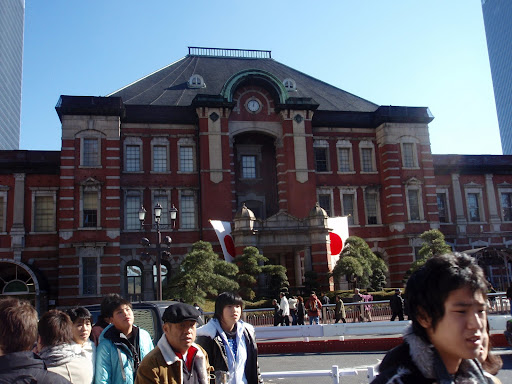
is the way to the Central Station of Tokyo (Tokyo Station name) was built in the English style architecture.


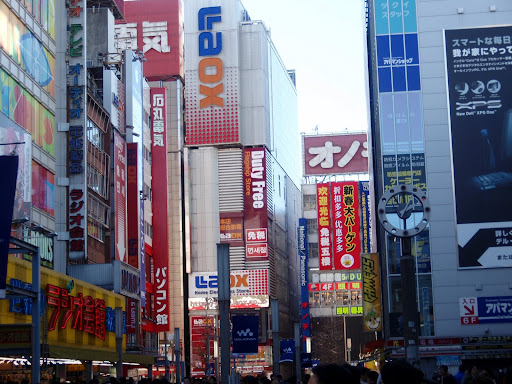
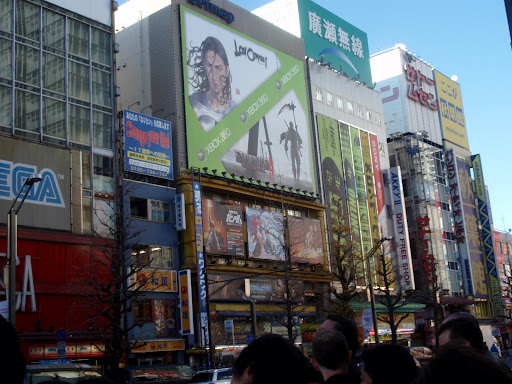
After lunch we then moved on to Akihabara, the famous art Geek / Otaku district of Tokyo. Um's in einem Satz zu sagen: Du bist interessiert an Computer/ Spiele/ Anime-Manga oder etwas ähnlichem? Fahr dorthin. Sofort. Akihabara muß man zumindest einmal gesehen haben, wenn man in Tokyo war.


In Roppongi waren wir nicht, aber um es mit den Worten eines Bekannten zu sagen: Gott existiert in Roppongi nicht, der ist auf Urlaub oder sonstwas.

Dafür haben wir einen Blick auf eines, der im Moment sehr angesagten, Maid-Kissa geworfen, d.h. soviel wie Dienstmädchen/-magd Café. In diesen Cafés sind die Kellner ausnahmslos junge hübsche Mädchen, in, je nach Café verschiedenen, Dienstmädchenuniformen. Sie sprechen mit hoher, zuckersüßer Stimme und in einer grammatikalischen Form, die den Gast besonders hochstellt und mit einer anderen, die sie selbst niedriger stellt. Zudem verwenden sie Phrasen als würde der Besucher in seine Villa nach Hause kommen. Das hört sich dann in etwa so an: "Willkommen zu Hause mein verehrter Herr/Gebieter. Womit darf ich Euch heute dienen? Bitte macht es euch gemütlich während ich Euch serviere." etc. Bei uns, oder noch schlimmer in den USA, frage ich mich wie lange es wohl dauern würde, bis die ersten Demonstrationen und Proteste von Feministinnen einsetzen? Reingegangen sind wir dann nicht, da wir nicht 1 Stunde warten wollten, aber gesehen muß man sowas auch einmal haben.
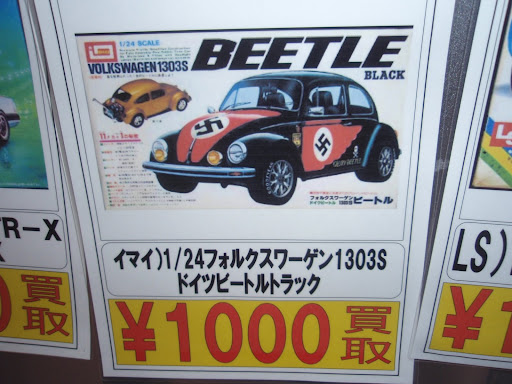
In Akihabara you can watch the craziness of the Japanese very well.

As a model kit:
I present: The Nazi-beetle


Our companions are back home, while Helmut and I were on our way to the Yasukuni shrine, take a stroll through the calmer areas Toyos did. In this it is very nice, and it comes on, as in a city the size of Bruck and Graz; nunmal Tokyo is also called "greenest" city in the world.
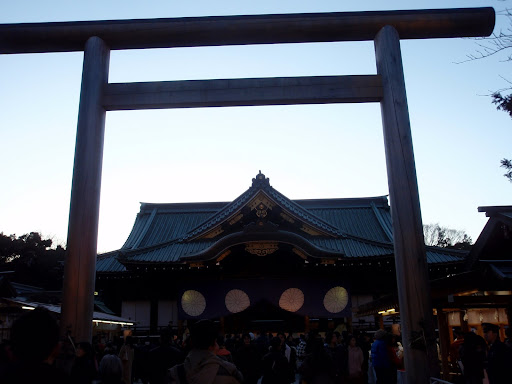
The Yasukuni Shrine is that shrine, which always causes controversy in politics, since there the souls of the fallen soldiers of various wars since 1855, are revered, but also including some convicted war criminals of the 2nd world war, which regurgitates acid especially in China.
I will not comment on the circumstances, since the theme included references to politics, reclamation, religion and culture, at least one dedicated, if not would fill several entries. It said only so much that it is not nearly so easy to explain and simple to use, how many people may think.


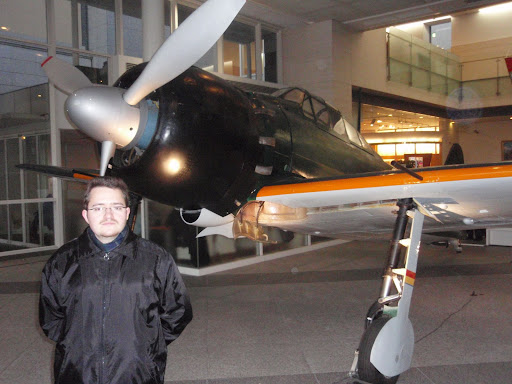
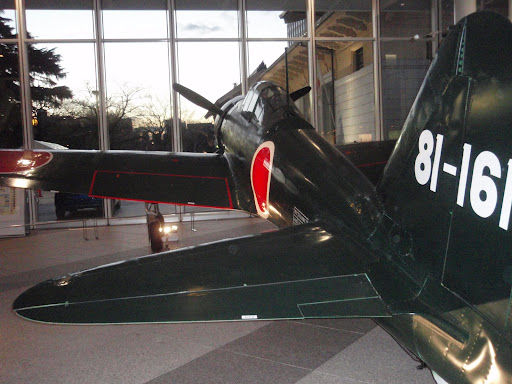
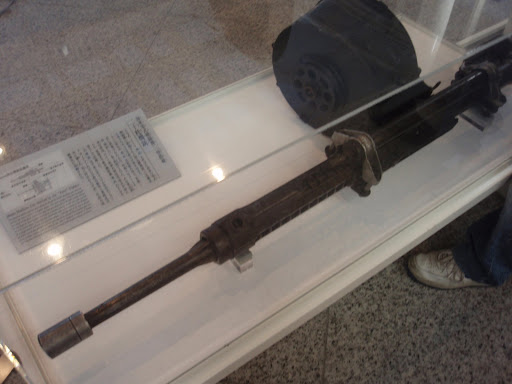
The shrine is also a museum with various musicians Expo, for example:

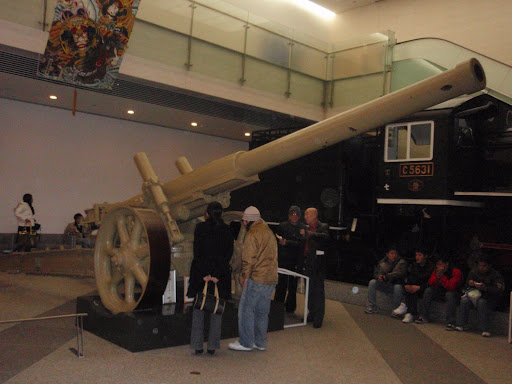
The pilot is waiting in front of his Zero fighters (Mitsubishi A6M) to the inspection by the commander


One of the two 20mm guns of the A6M5


on Okinawa found with bullet holes provided, artillery guns


addition to the 2nd World War II, actually here, "Great East Asian War," because the fighting in China have been covered since '37, deals but the majority (at present) with the Russo-Japanese War of 1904-05. We habem these exhibitions but not considered because it was already late, the museum was before the closing, and two History freaks like us for anything but take several hours (to say nothing of the subsequent discussions about it at all).

It is now night and then after returning to Helmut's home, I drove home, this time using the Nozomi Shinkansen. 589 kilometers in 2 hours 48 minutes, and exactly 2h 48min as indicated in the timetable, I, the accuracy of these trains (Shinkansen) do not mention often enough (well, maybe 2hrs 47min's were).

Conclusion: Tokyo is / was very nice and interesting and I would like to visit it again, but because of its size, I would want to live there permanently.


Much Thanks to Helmut for his hospitality and his work as tour guides!


The next time I report on my ski trip to Nagano, and shortly also on New Year's in Kobe.


interesting (and funny) facts / opinions about Japan:

Tokyo (东京) literally means "Eastern Capital" and it is only since 1868, since the Meiji Restoration and the move of the Emperor of Kyoto in the former Shogunpalast after Tokyo, the official capital of Japan, and in doing so after about 1000 years from Kyoto as the capital (a fact which many people of Kyoto have always regretted). The city also bears the first since This year the name of Tokyo, before it was called Edo, and was during the Tokugawa Shogunate (since 1603), although not officially the capital, political and administrative center of the country and the seat of the shogun. Therefore, this period is 1603-1853/1868 (1853 to 1868 is more or less as an interim period) also referred to generally as the Edo period.
Today, there are actually no real "city" Tokyo. There are 23 districts with the inner about 8.5 million people, all of which have separate management and act as their own cities, and the prefecture of Tokyo, with 12-13 million inhabitants the most populous, consisting of the inner districts and attached regions (where Interestingly, including several Pacific islands to) And the Tokyo metropolitan area, which extends to other prefectures (so this includes the city of Yokohama) and has almost 35 million, the largest metropolitan region in the world.
All three names exist and are used officially. It has therefore a certain similarity to Vienna, which is both a city, country and capital of Austria.

Tokyo is one of the most important cities in the world and is despite its size and very clean and green, and also as one of the safest cities in the world. The author himself is more concerned in the night by the Graz city park to walk, than by the Ueno Park in Tokyo (Obwohl Graz natürlich auch sehr sicher ist, keine Frage).


Diese Stadt gehört mit Sicherheit auch zur Liste jener Städte, die jeder Mensch einmal im Leben besucht haben sollte.