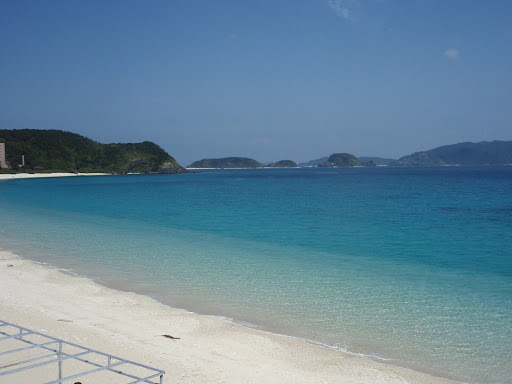
During our stay in Okinawa, we are also a ferry to one of the tens, the radius fluid control islets down, and there we have it done, what we already have enjoyed since the beginning of our trip to the Ryukyuinseln: On the beach white, basking and Sea bathing. Both
not a problem as it all the time on Okinawa has been 20-25 degrees, was great for sunbathing and the sea on the island also has 20 degrees, wonderful for swimming. Sorry, we did not have snorkeling gear here, which would have placed top it all, especially since even directly to beach fish of a size of 30, 40 inches swimming around, which could disturb the presence of a person. Since, as elsewhere mentioned, followed by Japanese always like the rules, and currently not a season for a visit to Sea, only a few people were on the beach.
course there are photos for proof of my claims, and yes, this Eintrag ist dazu gedacht meine geneigten Leser neidisch zu machen.


Weiters habe ich an einem anderen Tag allein, die Mädchen waren Wale beobachten, einigen der lokalen Museen einen Besuch abgestattet.
Vorsicht! Trockener Geschichtsunterricht
Vor allem das offzielle Präfektur-Museum von Okinawa hat es mir angetan. Dort wird sehr anschaulich an Modellen und mittels elektronischen Hilfsmittel die allgemeine und spezielle Geschichte der Ryukyuinseln und die einheimische Flora und Fauna dargestellt (Fürst 高貴, das wäre etwas für Euch gewesen). Beginnend in the stone age, we learn that Japan was settled by both sides, from one part of the northern route from Siberia, etc., and even the descendants of these tribes, the Ainu, isolated on Hokkaido live (with one very clear in appearance can be seen that they a different breed than the Japanese members), the other, on the southern route from southern China via the Ryukyuinseln. Both directions were possible because at that time in the north and south islands closer to the mainland and many were still were under water. Furthermore, we learn much about the development of the kingdom and its rulers to Okinawa, the mutual and interesting relationships with neighboring countries China and Japan, and a bit about the Battle of Okinawa with the ensuing almost 30 years of occupation and administration by the Americans, will also address the problems with the occupying forces and members of the Navy of today.
No less part of the exhibition is the cultural characteristics of the Ryukyu devoted time, which differed because of different influences in some respects but much of the mainly Japanese, and therefore reverberate to this day.
Very interesting were the descriptions and models of domestic animal and plant life, from the northernmost to the southernmost island, but some changes go through although generally regarded as the climate is subtropical can be described. It is on the southern islands, which we wanted to travel initially, where the journey but twice (!) Would have been so expensive as to Naha, really right dense jungle, mainly composed of mangrove forest, with all the typical jungle animals.
The only problem I had with the show was, as so often in a museum that I would have simply required more time, everything to me to look more closely.
Unfortunately I posted no photos of the exhibits
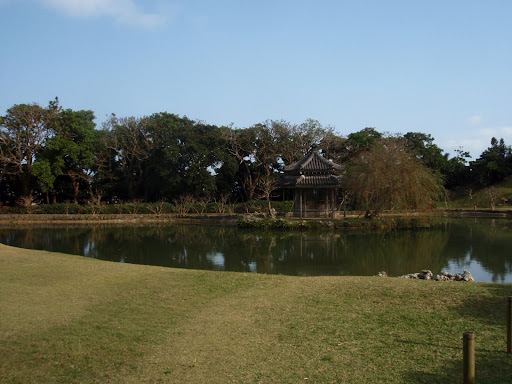
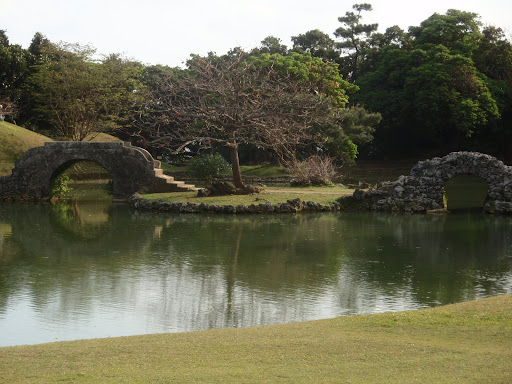
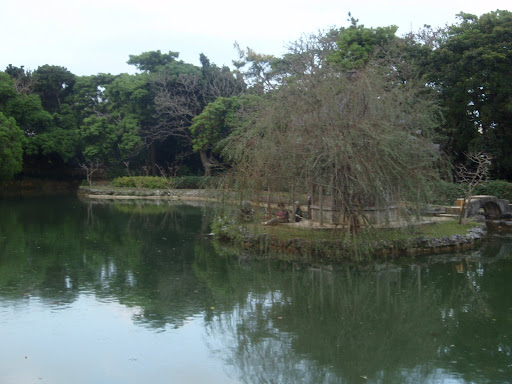
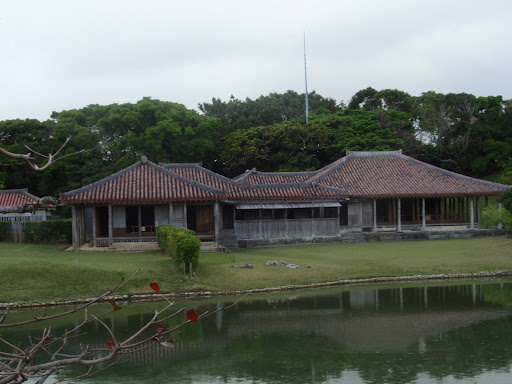
as the latter, we were still in the royal gardens. These were originally a part, as a recreational space, including a small house for the royal family to the south of Shuri Castle (only) built at the end of the 18th century, on the other hand, they also served as a receiving point for Chinese delegations. Therefore, some typical characteristics of Chinese garden design incorporates, for example, an octagonal pavilion in the Chinese construction on a small island in the pond, or the general basic structure of the garden. As also reported the gardens were destroyed in World War 2, in the 70's then began the restoration, which has now after 30 years (due to the time required for the growth of plants, etc.) re-created the original character and appearance.
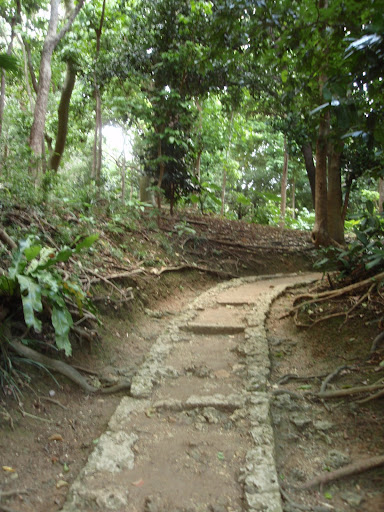
Today, the gardens of the world cultural heritage and are one of the places of national scenic beauty of Japan. How are common for large gardens, while many Asian parts neatly trimmed and processed, but in contrast to eg an English garden, areas for the most part left to itself, so that, if one follows the paths, you get the feeling that they follow the jungle the old streets of a long lost civilization, and behind the next corner could be a long-ruined city appear that civilization. Therefore not be missing the warning signs of snakes that can be hidden in the undergrowth.
interesting (and funny) facts / opinions about Japan:
In the Edo period was the Ryukyukönigreich in double function of the Chinese empire of the Qing Dynasty and Japan under the Tokugawa shogunate. Therefore, in addition to the payments and receiving delegations also included trips to the administrative capitals of China and Japan the duty of the court of Ryukyu. This means on one side of a journey of several thousand kilometers by boat from Taiwan to southern China and from there by road to Beijing / Beijing on the other side also several thousand mile journey by ship to Kyushu and western Honshu and then by road to Edo (now Tokyo) and in both cases the same way back. Both trips lasted about a year and were usually led by a prince, although, just as it corresponded to the court etiquette and protocol (actually worldwide), the respective delegation had an impressive size and countless articles of inestimable value as a gift or were carried as a provision for the ads of their own size.


0 comments:
Post a Comment