Zu Beginn etwas Persönliches:
Am Wochenende ist leider ein Bekannter von mir aus meiner Gemeinde verunglückt.
Im September haben wir noch gemeinsam mit anderen Freunden am Uhudler-Kellerviertelfest gefeiert. Für jene die dabei waren: Am Webalbum sind die Photos davon, auf einigen ist er auch zu sehen.
Mach's gut Dani, wo immer du jetzt auch bist ...
In Japan ist nicht viel Neues passiert, außer das jetzt die letzte Prüfungswoche an der Uni am Laufen ist.
Am Freitag habe ich mich mit Katrina, einer Freundin aus Malaysien getroffen, die in meiner Gruppe während the summer course at the university was (yes, it is clear to me that I still have not delivered the report on my 3-week summer stay in Kobe, thanks). Unfortunately, it was so only a few days in Kobe and has gone back on Saturday, we were able to spend only a few hours together. We went with a mutual friend in the well-known sushi establishment (she was with David and me in the summer there) and then still have to talk a few hours. It was nice to see
again someone from the summer course, this is really just six months ago?


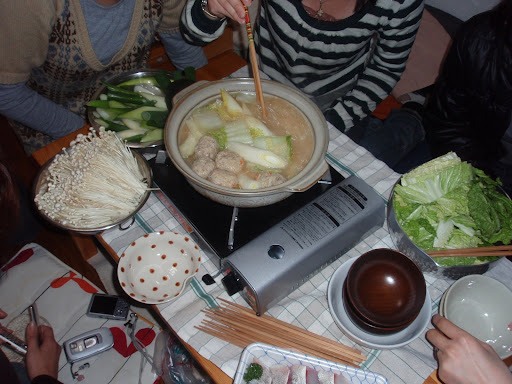
Furthermore, I was invited by a friend on Saturday to the hub or Nabemono food in small groups. "Hub" to mean only "pot" or "pot" and "Mono" simple "thing." It means only that you cook with boiling water pot of different things, depending on your mood, so there are many different Nabegerichte and names, as one can practically pure throw almost anything. Nowadays it is usually prepared with a small pot on a gas stove, water and the spices are done and then to taste meat, fish, vegetables etc. is cooked. It is important for Japanese people especially from eating together a pot and sitting around the pot, since they are the Opinion is that this results in a closer friendship (it was explained to me at least). True to the Austrian expression "When eating kumman d'folks ZAMM."
This one is so often invited to someone's home, which is in itself a great sign of friendship (see one of my previous entries).


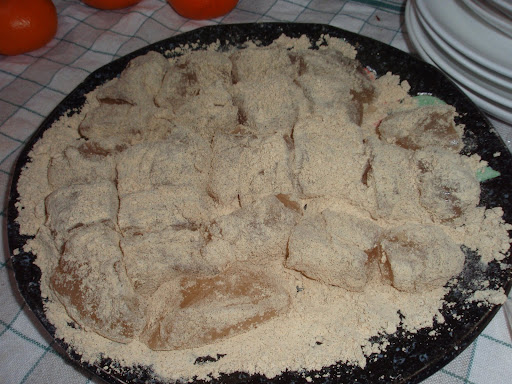
dessert
The special was on Saturday that the invitees were all people who learn German and ever at the Graz University have been, or will attend university, and 2 people have just started with German. Nevertheless, the whole evening talk in Japanese and Graz do not really mentioned (I was not so abused as a teacher).
But sitting in the Japanese headquarters (Seiza) is still very painful.
However, I did not let it take me to present you good Burgenland wine. I have indeed, thanks to tips from Trump-sensei found here in Kobe, a business that specializes in the import of Austrian wine, and as the founder and owner is a castle country, there is the rest of itself
Although A dry Blaufränkisch, he has tasted them very well and now the Germans have logged out of my home interest in the Burgenland wine tasting good. This will then probably be a ice wine.
interesting (and funny) facts / opinions about Japan:
In the last week (3rd or 4.Feb) was celebrated in Japan, Setsubun (节 分). Originally a celebration for every change of season, it is now in this form only for spring, according to the traditional Japanese calendar (originating from Chinese), carried out. Primarily, rituals held to distribute the Oni (a Dämonenart) or to keep out (comparable with the expulsion of evil Geister im Winter in unseren Regionen). Die häufigste Variante, vor allem im privaten Bereich, ist dabei das Verstreuen, bzw. Werfen von Sojabohnen (genannt Mame-maki) auf als Oni verkleidete Leute oder in bestimmte Richtungen im Haus, begleitet vom Aufsagen eines Bannspruches.
Es gibt, vor allem in den buddhistischen Tempeln und shintoistischen Schreinen, noch viele andere Bräuche, welche auch von Region zu Region unterschiedlich sind. In der Kansai-Region ist es ein Brauch eine ungeschnittene Maki-Sushi Rolle zu essen, allerdings hat sich dieser Brauch inzwischen anscheinend auf ganz Japan ausgebreitet. Das Setsubun ist aber kein nationaler Feiertag, und somit ein ganz normaler Arbeitstag.
Randnotiz: Morgen, am 7. Feber, ist This year New Year according to Chinese calendar, which, like Easter, is held every year on a different day. Thus begins the well-known, about 2-week Spring Festival, the Chinese.


0 comments:
Post a Comment