But first:
Since New Year, as already mentioned, similar unsererm Christmas and thus is a family event, is a New Year's Eve in Japan: Boring. Although there are still many people on the road, and there is enough alcohol available, but it is hard to compare with our New Year's Eve celebrations.
For my part, I 31 spent with a visit to my host family, and went in the evening with Simon to Sannomiya. After an excellent meal in a side street restaurant (main courses are grilled and then served on small skewers), we have gone for the year in an English pub. As I said, the change was relatively unspectacular, but the realization that, while here already New Year is celebrated it at home just 16.00 Clock and on the West Coast even the morning of 31 is, was a strange feeling.
After I went to Tokyo, and at 4.1. embarked on a ski trip to Nagano. This exchange was organized by the student center, which bedeudet that the 35 participants were all exchange students, so unfortunately, except for the workers, no Japanese there. However, since over half of the people from Chinese and Koreans insisted were still plenty of opportunities to practice available in Japanese.
The first is in Nagano notice: snow. SNOW! And it is really really much. And freezing temperatures. Lovely!
Sorry, I need a little bit to get to me ... okay going back.
The rooms at the hotel were kept in the Japanese style (ryokan -> Kanji), which means that the floor was made of tatami mats and futons to sleep but gave no beds. A futon is a thin mattress (actually just a big, somewhat thicker blanket) (filled with beans in this case) to be placed on the tatami floor and a pillow and a blanket (thin in summer, thick in winter) to cover yourself. A futon is directed to put away after going to bed and placed in the box to be, for reasons of saving space. Unfortunately I have no good photo of the room, but you should also get a rough idea of \u200b\u200bit here.

The central table is cleared when you hang up the futons for sleeping.
People were each four to a room, with men and women, as is customary in Japan, not only on the room but were separated from floor to floor (except for families and couples, they were also in an extra floor, or section) .
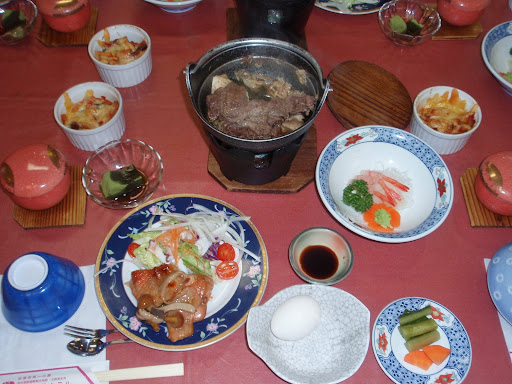
For breakfast, it was also tinged with western food (ham, sausages and scrambled eggs), the dinner was great but of course purely Asian (Japanese, Chinese) and very large and good.
An example
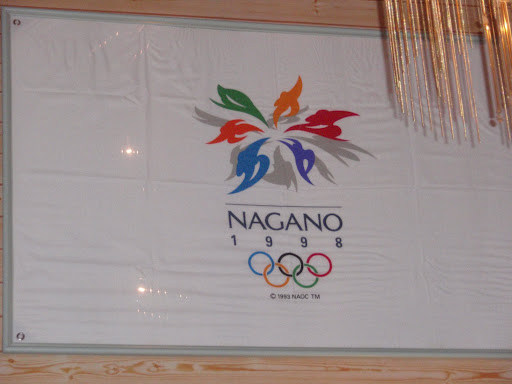
We were in the Shiga Kogen ski area, where are the slalom and Riesentorlaufpisten of the Olympic Winter Games of 1998 (unfortunately not the exit door, I would have liked the section where Hermann Maier started his flight). The nice thing was that the participants contrary to what is customary in Japan, were allowed to operate freely and independently, and did not have to be in a group. Except, of course, of the ski courses for beginners, but they were obviously happy to be in a group.
Japanese mountains are, as one can see in the photos below, because of their Formation of volcanoes in general, even at higher altitudes (2000m and upwards) relatively flat rising, mainly rounded. There is little more rugged cliffs and sharp peaks barely (as in the Alps), accordingly, there is also the majority of the slopes of green (in our case blue) and red runs. Yet of course there are also black runs, and sections (otherwise, the Olympics would have been difficult), but with these there are in Japan, I think a big problem: Japanese seem to be the view of black runs only from absolute professionals and from Freaks and crazy ride for those people just blow the snow was not only a right, which is why they integrate in more than half of all black sections, a mogul. With no warning or chance to avoid passing.
I personally HATE moguls. In my opinion, it seems like a good deal of advanced driver that bumps ruin otherwise beautiful slopes, because they interrupt the Fahrfluß, especially bad for men and material and is simply unnatural. There are people who drive them happy, and I have absolutely nothing against it from time to prepare for portions of slopes, but please but not to the entire width of every other beautiful black descent.
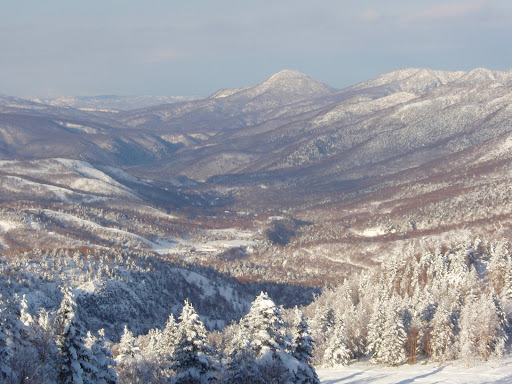

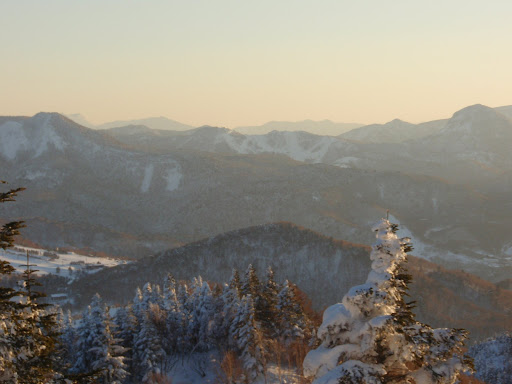
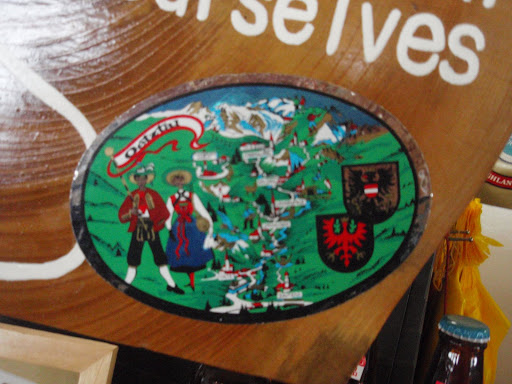
Something I've seen happen in a ski lodge on a hilltop:
A normal service sign, but note the sticker in the right corner.
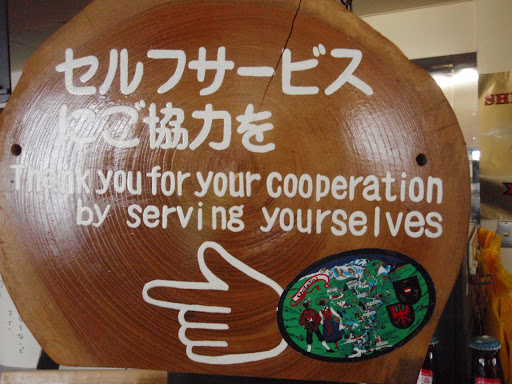
Right! A sticker of the Ötztal, complete (not seen here) with place names in German
Not to sum up in the middle of Japan in any small ski hut.
As in Japan at such events (excursions, etc.) are common, there was this time one of the supervisors organized party in one evening. More detailed description of the structure and sequence such parties in the column. In any case, has been found that Asians, especially girls because of her petite figure, sometimes have problems with alcohol. That was a Chinese woman after Komsum (but almost on a train) (compared with far-called "alcopops") of a box of a Japanese sweet alcohol mixture "done" with not quite the alcohol content of beer, complete.
The Germans at work

Nagano is famous for its apple production areas (as I shall think of my hometown) and for its soba noodles. The apples we've seen for sale were truly enormous, thus the issue of cultivation methods raises, but, interestingly, they were not also artificially flawless, as are found in Austrian supermarkets often, they actually go out like normal, right apples.
were total there are 4 full days skiing with both 9-hour bus ride there and back. Despite this effort, it was just beautiful and it has paid off all cases.
interesting (and funny) facts / opinions about Japan:
parties in Japan. In Japan is common that are organized on trips, on longer conferences and meetings within larger companies, parties. This range from small, with snacks and a small selection of drinks, to big buffet with all kinds of alcoholic beverages. How herauszulesen from the last sentence, alcohol is always an important component, although the basic idea, of course, getting to know and maintain contacts with colleagues or relax in a casual atmosphere. To create any false expectations: The actual consumption of alcohol is one of the few points where the peer pressure is very low (he even seems to be lower than in Austria), but you should follow the non-drinking consistently throughout the party. Company and officially organized celebrations are almost always free while private parties it is usual that jeder Gast einen kleinen Anteil an Getränken und "Snacks" mitbringt, bzw. eine kleine Gebühr zu entrichten ist, für große Besorgungen die von jemandem Bestimmten erledigt wurden.
Ob rein privat oder geschäftlich, drei Dinge haben alle japanischen Partys gemein:
1) Sie dauern eine gewisse Zeit oder enden zu einem bestimmten, vorher festgesetzten Zeitpunkt. (im Falle der Schitrip-party war dies 22.00 Uhr) Damit ist die Party offiziell beendet und von den Gästen wird erwartet, daß sie den Ort des Geschehens verlassen.
2) Direkt am Ende der Party wird sofort alles aufgeräumt, wobei von allen Gästen erwartet wird, daß sie helfen (zumindest jene, die noch in der Lage dazu sind), der gesamte Garbage collected and leave the Venue as it was found.
3) The non-komsumierten food and drinks will be distributed to the guests, which means that each guest left of the things to take home may be what he wants without having to refer to who brought what.
Note: The above item featured on Rules and practices apply to parties that are not held in private homes (home of a host), but in areas which are specially designed for parties and meetings. At parties in private homes, the rules can change slightly depending on host. This is important, Japanese celebrate as often "outside", and it is on the contrary a great honor and a great sign of friendship and composite nature, if one is from a Japanese invited to his home.


0 comments:
Post a Comment