After months I finally get to leave a message on my blog since then but now the semester for me is over (while my friends in Japan still have until the end of July and university exams). Who cares
it: With the end of this semester is my degree (finally) finished handy, it's missing is the thesis in which I write during the summer.
But back to Japan:
One of the most important events in Japan and one of the world's best known, the time of Sakura, Sakura (桜) is called. As with Fall leaves in the fall (see my entry this past fall), the Japanese gather by the thousands each year by Hanami (花 见) to make, which means looking like flower / blossom. Here families and friends go to parks to (white as ours, or particularly beautiful: the Japanese pink variants) under the blossoming cherry trees to sit and have a picnic together (often with large amounts of alcohol). Hanami sometimes refers to the Japanese plum that blooms about a month earlier, but almost always ensure that Sakura is meant.
The tradition of Hanami has been around for about 1000 years (documented in records), but it's probably even a few centuries older, accordingly, it has a high priority in Japan and is very important for all parts of the population. Each year, already announced in the weeks before the news report the times of prosperity and indeed from the south to north, since it is faster in the warmer south and the flowers open earlier. This is so important that it has happened before, that the public television Chefmeterologen humble had to apologize when they have predicted the heyday wrong. That is not so easily, because many Japanese to take a day off for extra Hanami and (to say the least) are not thrilled when the trees are not in full bloom.
Apart from the fact that the cherry blossoms herald the spring, so it comes up even when it really gets really hot again (in many parts of Japan is the coldest month of February compared to January of us), it is, as connoisseurs of Japanese film or anime visionaries know, a message for the death, the transience of or in connection with the samurai. What I was explained in that die Kirsche nur kurz blüht und dann in ihrer vollen Blüte (also am höchsten Punkt ihrer Schönheit) bereits abfällt, daher soll das früher für die Samurai ein Beispiel für einen würdigen, jungen Tod gewesen sein, es wurde auch oft in der Literatur verwendet.
Daher sieht man in japanischen Filmen oft den einsamen Ronin leicht unscharf unter herabfallenden Kirschblüten stehen, oder fallende Blüten werden als Stilmittel eingebaut (bzw. als Metapher dafür verwendet) im Moment des Todes eines Samurais in einem (ehrenvollen) Duell.
Auch in Wirklichkeit sind die im Wind fallenden Blüten wohl wunderschön, vor allem in den Parks, wo oft unzählige Kirschbäume gepflanzt sind, Kirschbäume are and were a popular gift in Japan to friendly countries. Unfortunately I had to leave
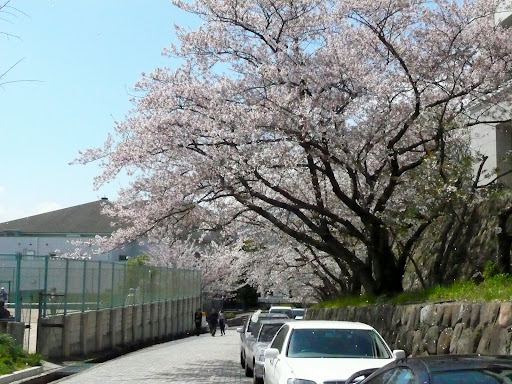
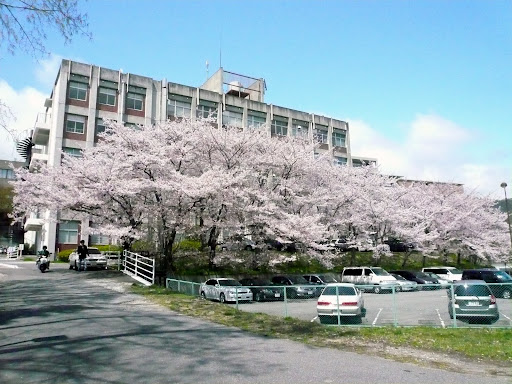
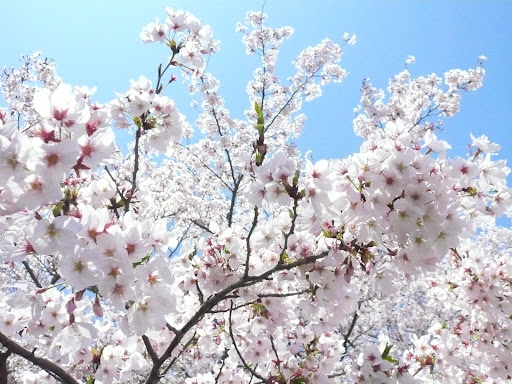
2 weeks early so I could no longer participate in Hanami and the rule of my seat even though the Park in Himeji is one of the most beautiful places for hanami in the neighborhood, probably even in the whole prefecture is. Therefore, I have unfortunately (thanks Naomi!) No photos but a friend has for me took some of the trees on the campus of the University. Although it rained heavily the day before and unfortunately, many flowers were dropped so already, the Sakura are still very beautiful.
Interessante (und lustige) Fakten/Meinungen über Japan:
Nach langen Wochen haben wir nun endlich wieder ein Lebenszeichen von unserem Autor erhalten, leider aber keinen neuen Artikel, doch scheint es ihm wieder besser zu gehen, und wir hoffen in nächster Zeit genaueres über seinen Zustand zu erfahren.


0 comments:
Post a Comment